
May Singhi Breen
May Singhi Breen, affectionately known as "The Ukulele Lady," has long been recognized as one of the outstanding exponents of the ʻukulele. She convinced music publishers of the commercial value of ʻukulele arrangements and pioneered the inclusion of arrangements on almost all printed copies of popular music. Her own arrangements appear on more pieces of sheet music than those of any other single person. She was also a teacher — she recorded the first ʻukulele instructional record and is considered the first to teach the instrument in schools. Her instructional books emphasized the solo capabilities of the ʻukulele with her slogan "Uke can play the melody."
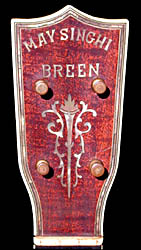
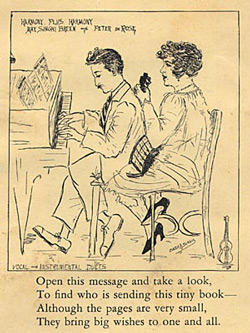
May Singhi Breen was born in New York City in 1895. She received her first ʻukulele as a Christmas gift, but she didn't know how to play. According to her obituary, she tried to return it to a department store for a bathrobe, but the store wouldn't exchange it so she decided to take lessons. It turned out she was gifted with ʻukulele playing talent.
She and a few other young women formed an ʻukulele group, the "Syncopators," who performed on radio. She left the group in 1923 when she met songwriter Peter DeRose, whom she married in 1929. Together they formed a radio show called the "Sweethearts of the Air," which ran for 16 years from 1923–1939. They were wonderful entertainers, and played music over the air with DeRose on piano and Breen on ʻukulele. She was so popular that P'Mico added an instrument to their ʻukulele line — the May Singhi Breen autographed model banjo uke.

Breen's energy and effort in promoting the ʻukulele contributed greatly to ʻukulele history and culture. She taught ʻukulele in private schools as well as in the studio at her "Uke Trades Publishing Company" in New York City.

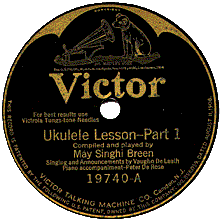
She formed and gave lessons to many ʻukulele groups because she believed that the instrument's popularity would become more universal by the formation of clubs, but she also emphasized the ʻukulele as a solo instrument. Her slogan was "Uke can play the melody." Not only was she the first to teach ʻukulele in schools, but she was the first to record ʻukulele instruction, on a 78 rpm Victor label record titled "Ukulele Lesson."
When the question arose in the Musician's Union whether or not the ʻukulele could be classed as a legitimate musical instrument, Breen's efforts convinced the Union to vote in her favor. She then pursued standardization of the ʻukulele, exemplified by her use of the Universal D Tuning throughout her printed teaching methods and music arrangements. Her published books include song folios with ʻukulele arrangements from the 1920s and instruction books from the 1950s.
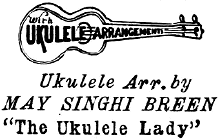
Perhaps Breen's greatest contribution to ʻukulele history was in convincing music publishers of the commercial value of ʻukulele arrangements. It was through her efforts that ʻukulele arrangements appear on all printed copies of popular music. In particular, her own arrangements are found on sheet music more than those of any other single person in history.