Question: Please help with identifying this uke. It's a Serenader and is labeled as such (B & J). Any idea of age and actual maker?
Answer: Your ukulele was made by Regal, one of the big Chicago-based ukulele manufacturers. It was most likely made in the 1930s. The scroll stencil, fretboard markers, and fretboard extension decal are all Regal characteristics.
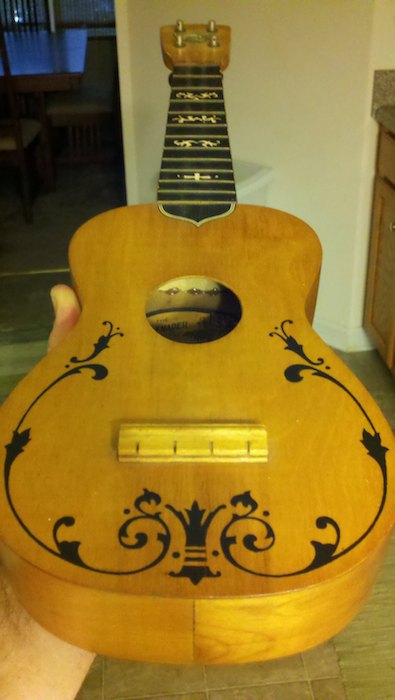
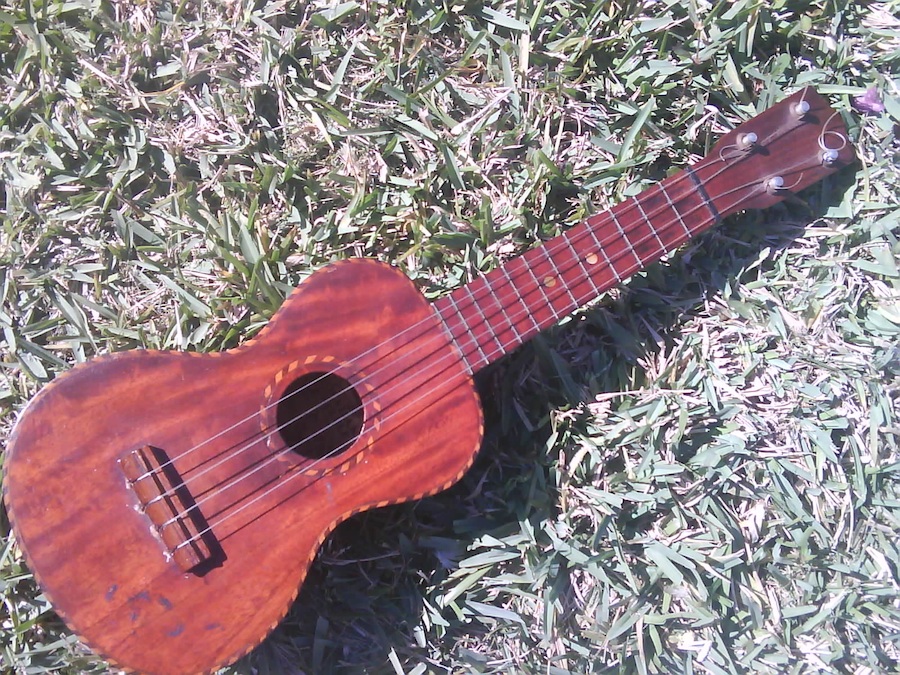
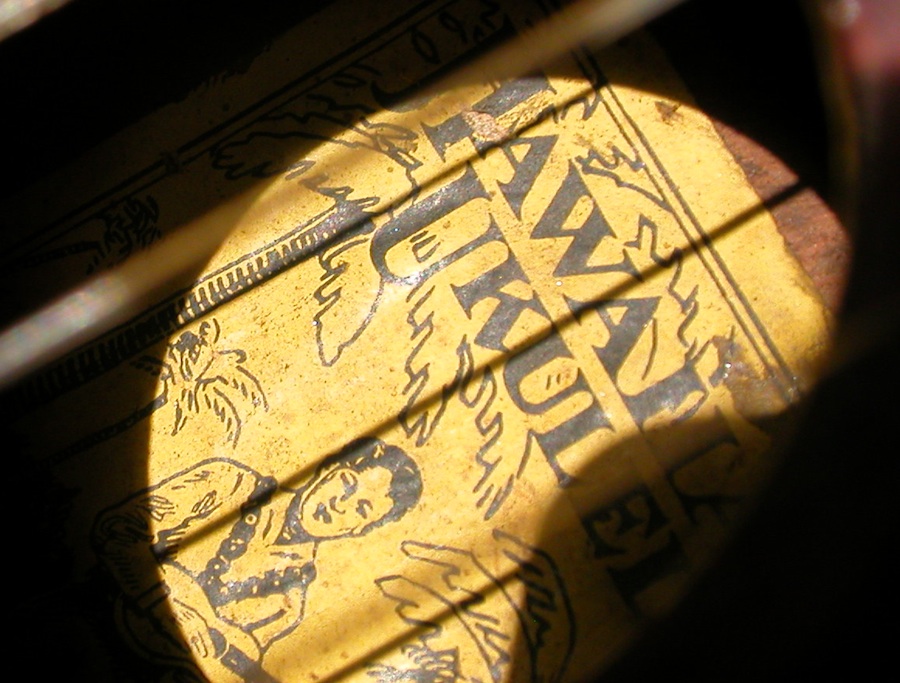
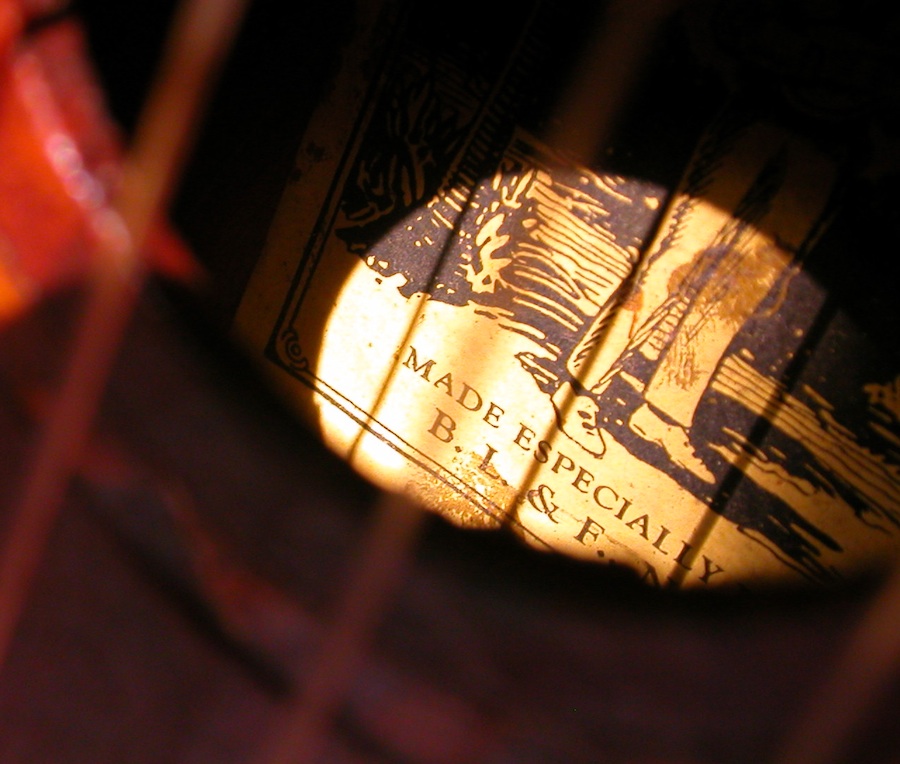
Question: I picked up this old ukulele at my mother's house (we used to live in Hawaii) which says "Hawaiian Ukulele" inside with a picture of a man playing a ukulele and at the bottom says "Especially made" for and then a series of letters. Can you help me to research this? Thank you!
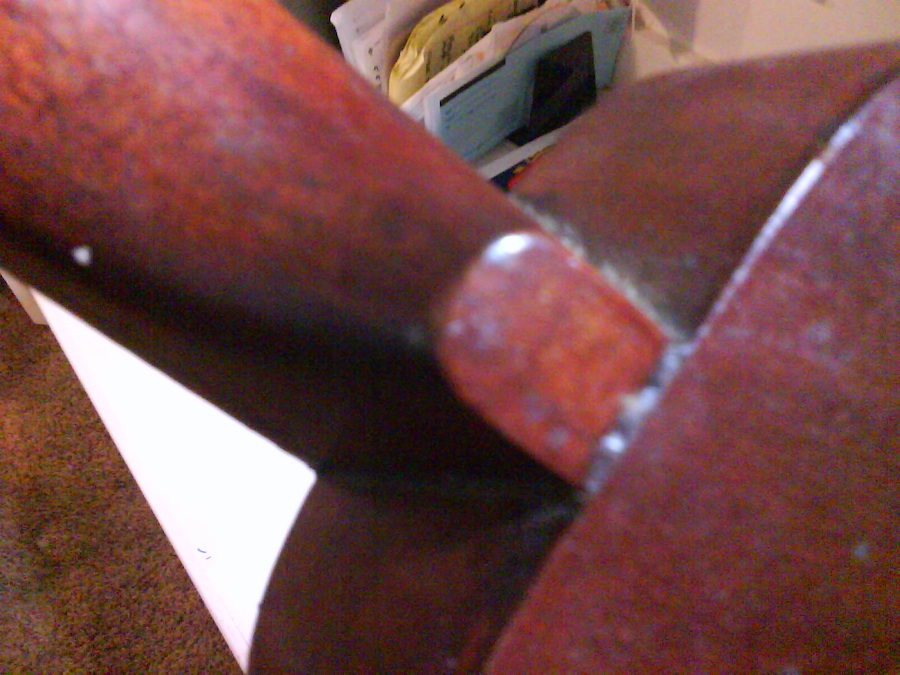
Answer: The letters B. L. & F. at the bottom of the label stand for Barth, Lutchen, and Feinberg, a major musical instrument distributor based out of New York city in the 1920s. They sold ukuleles made by various companies, putting their own labels inside (or having the manufacturer glue in the BL&F label). I know that BL&F sold some ukuleles made by Harmony, but yours does not appear to be a product of the Harmony factory. The last photo showing no heel cover or two-piece neck suggests that your ukulele was made on the mainland. It was made to look similar to a Hawaiian ukulele. It is probably from the early 1920s but could even be from the later teens. I am not sure about the specific manufacturer.
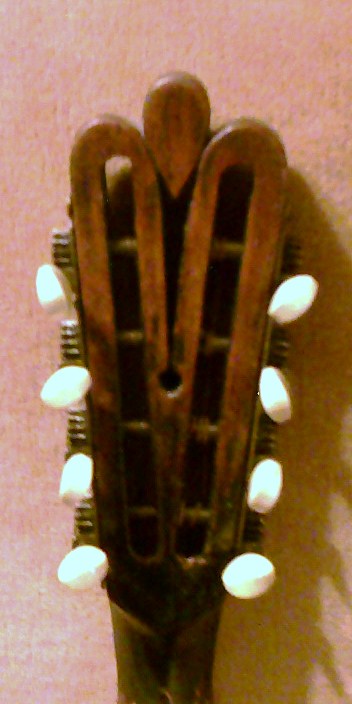
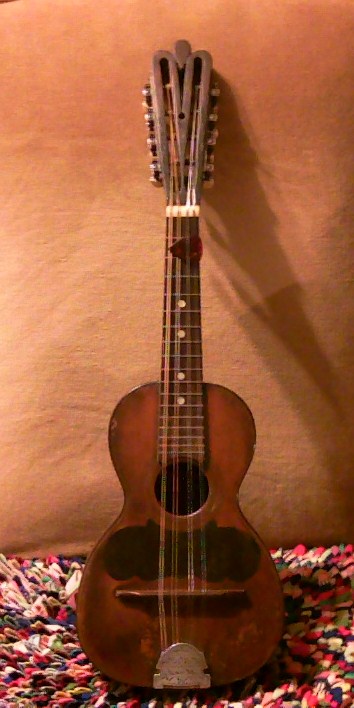
Question: I am trying to help a friend identify the maker and year of manufacture of this instrument. I think it is an 8 string tenor ukulele. What are your thoughts? Thanks.
Answer: That is a very interesting instrument, but I don't think it is related to the ukulele. It is a type of mandolin now often called a mandolinetto. These were popular in the first few decades of the 1900s. I have seen a pretty good number of mandolinettos over the years, but yours is very unusual. The carved headstock is especially unusual — I would think that it could be used to help identify the maker, but I have never seen it before. Any readers who might have any information feel free to write in.
Question: Any info you can give me on the attached ukulele would be greatly appreciated. It's not in great condition. It was a crawl space find when we purchased our house in 1989.
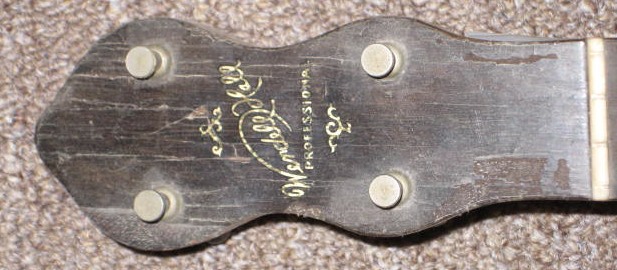
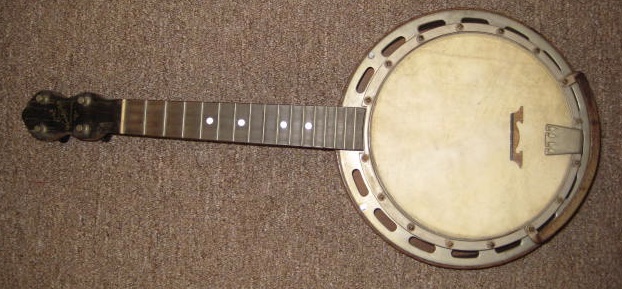
Answer: Your Banjo Ukulele is a Wendell Hall Professional model made by the Ludwig & Ludwig of Chicago, Illinois. Ludwig made very high quality banjo ukuleles in the late 1920s through around 1930. They are prized by banjo ukulele players still today. The Wendell Hall Professional model was actually Ludwig's most basic model — it sold for $25 in the 1920s. Yours is a little rough, but the condition doesn't look all that bad. Pretty nice crawl-space find!
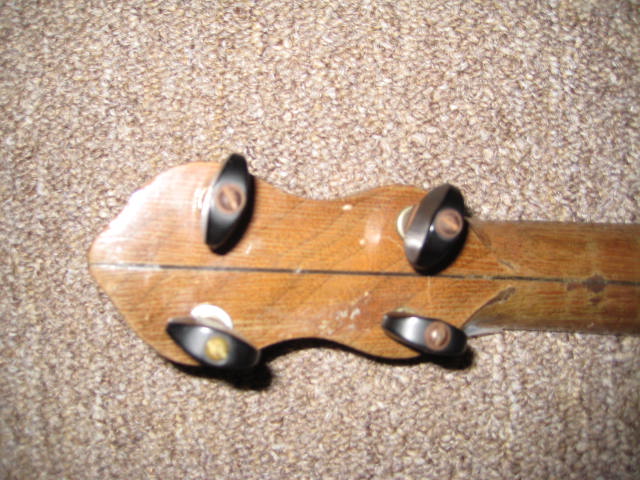
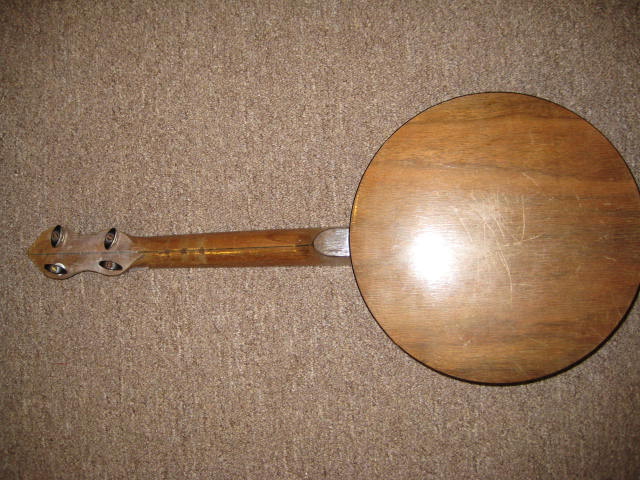
Question: Hi. I've just purchased this great uke and can't find information on it anywhere, I have found Aria and Ariana but not Arion... It came in a case similar to a violin case and is in good condition. Regards.
Answer: I don't know much about your ukulele except for the fact that it appears to be of German origin. The mark on the bottom reads "Ges Gesch". "Ges Gesch" is an abbreviation for "gesetzlich geschützt". Gesetzlich translates from German to English as "legally". Geschützt translates from German to English as "protected". From what I have read this mark was used on many German items much like a patent or trademark. I am not familiar with the Arion name in particular or German ukulele manufacturers in general. I do know that the German company Bruko has made ukuleles on and off since the 1930s. But I have no idea if your ukulele has any relation to the Bruko company.
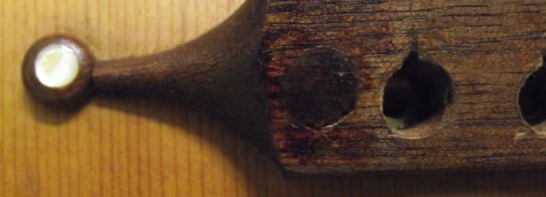
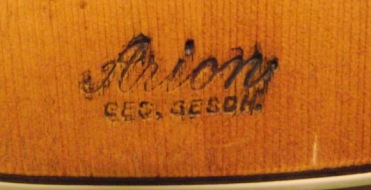
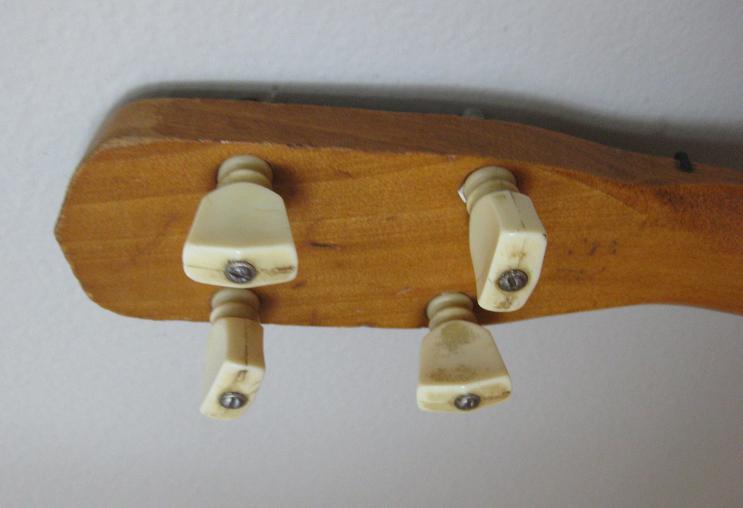
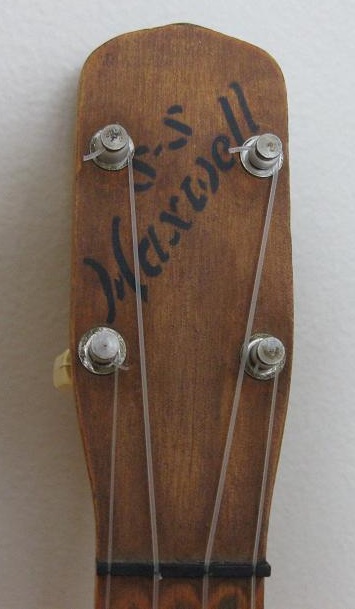
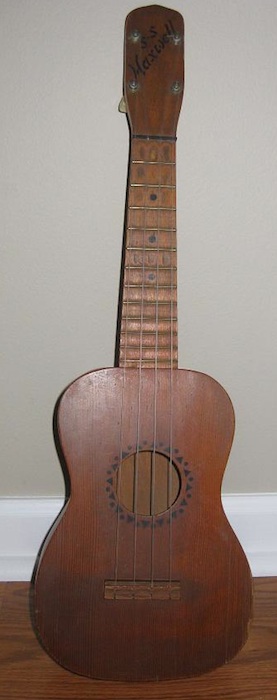
Question: I cannot find any information on SS Maxwell Ukuleles. Any information would be appreciated. Thanks!
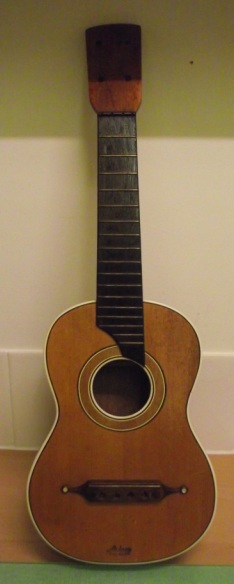
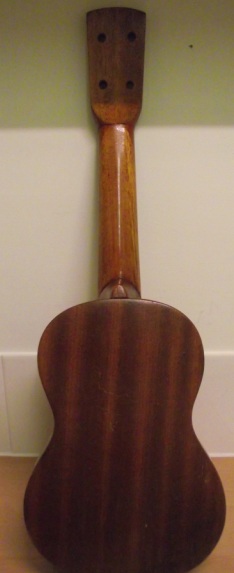
Answer: SS Maxwell was a trademark name of Targ and Dinner, a Chicago based musical instrument distributer. T&D bought instruments from various manufacturers and sold them under their own trade names. Your ukulele was made by a major Chicago manufacturer, Regal Musical Instruments. The SS Maxwell name was registered in 1931. I would estimate your ukulele was made sometime between the late 1940s and the middle 1950s based on the style of ukulele and the tuning pegs.
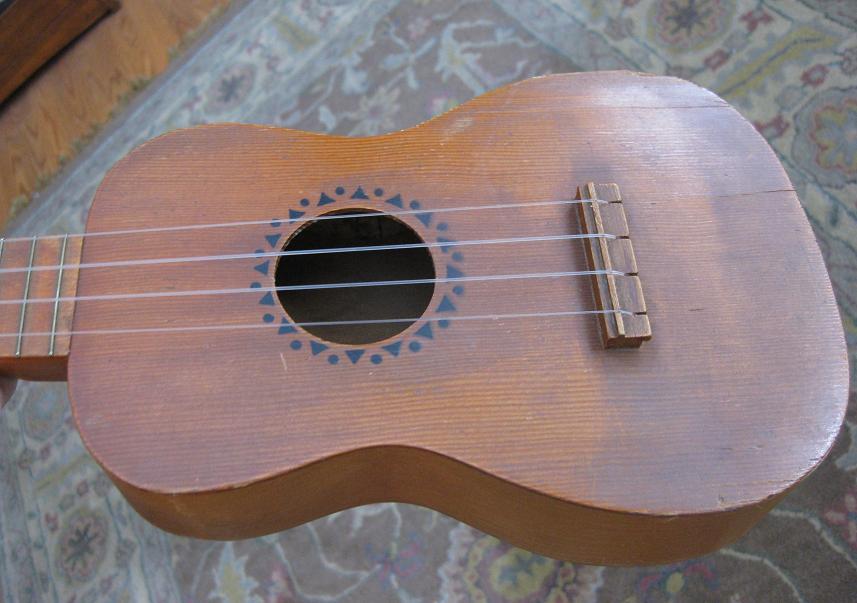
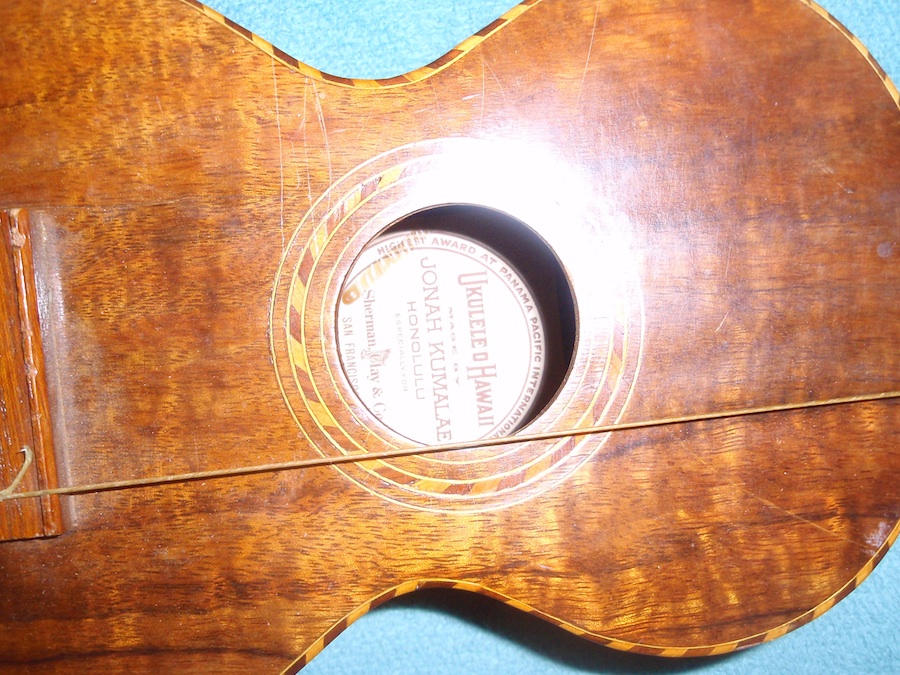
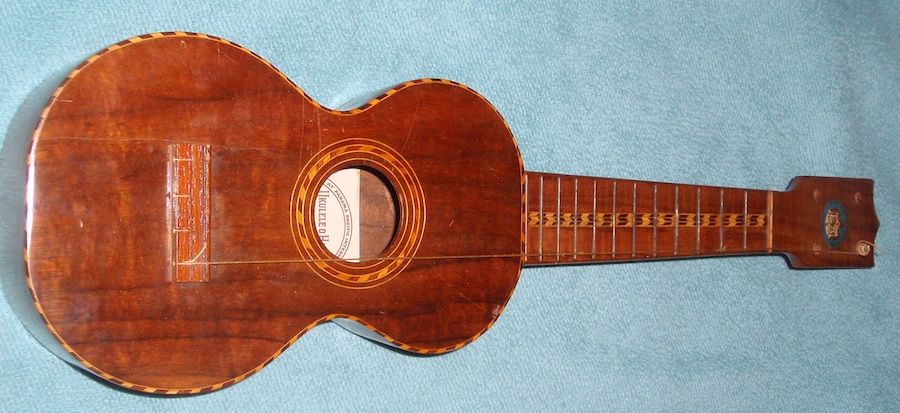
Question: I found this ukulele in a thrift store and I would like to know about how old it is. I have found other Kumalae ukes on the web but none with the same labels as this one. The one remaining peg is wooden. The inside label says "Ukulele O Hawaii made by Jonah Kumalae Honolulu especially for Sherman Clay and Co. San Francisco", with "Highest Award Panama Pacific Exposition 1915" around the outside of the label. It has a small crack, but the one string still sounds pretty good... Any information you can give me would be great. Thanks.
Answer: Your Kumalae decal is from his early period. I'd estimate your ukulele to be from 1916–1920. It is a pretty fancy model with the inlay on the body & fretboard. It is made from some very nice Hawaiian koa wood. It was a model Kumalae designated as model "D"; Sherman Clay's model number was 24.
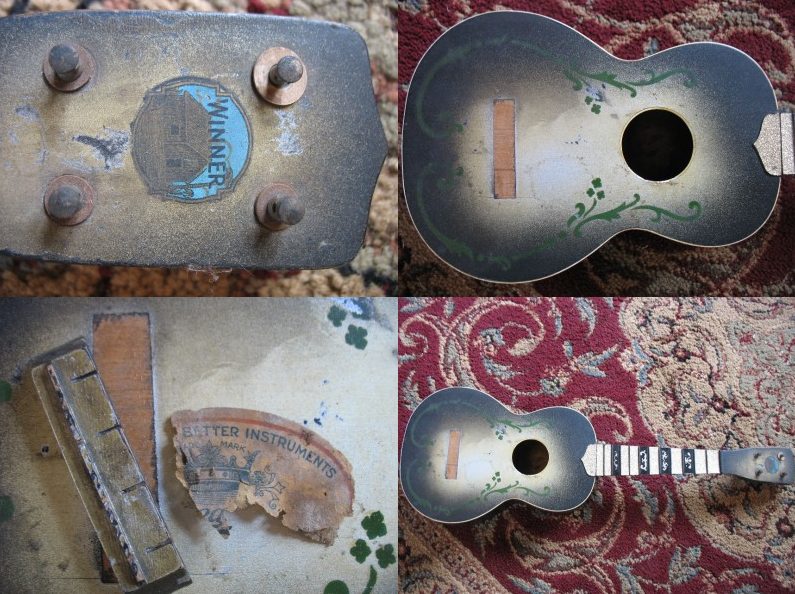
Question: Hello, what can you tell me about this ukulele I recently picked up?
Answer: Your ukulele was made by the Regal Musical Instrument Company of Chicago, Illinois. The partial paper label is a piece of the standard Regal label. Winner was a brand name used by a particular instrument distributor, but I am not positive of which one. It was most likely the Manhattan Band Instrument Co. They registered a different "Winner" logo in 1926, so I would guess Winner was their brand name and that the logo just changed over the years. I would estimate that your ukulele was made between the late 1920s and the mid 1930s.
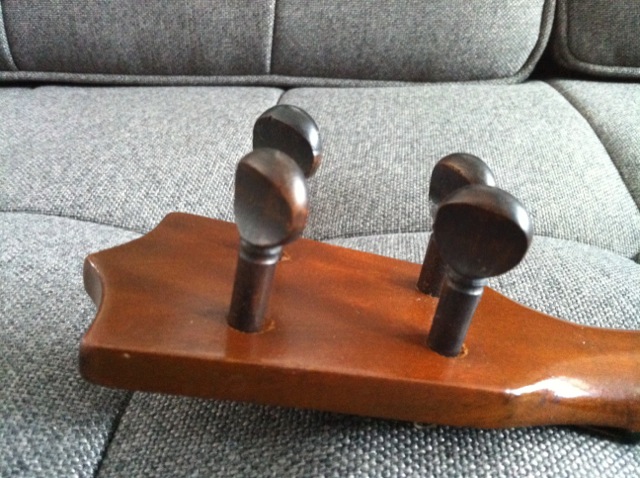
Question: Hello. I just purchased this Martin Concert Ukulele. I am unable to find photos of ones similar. The wood tuners are something i have not seen on the Concert size. Cheers.
Answer: Your ukulele was made during World War II. The metal restrictions during the war forced Martin to use wooden pegs on many of their ukuleles, including some concert ukuleles. There were likely only a few hundred of these concert ukuleles made with wooden pegs, so they are not common. Looks like a nice ukulele — enjoy!
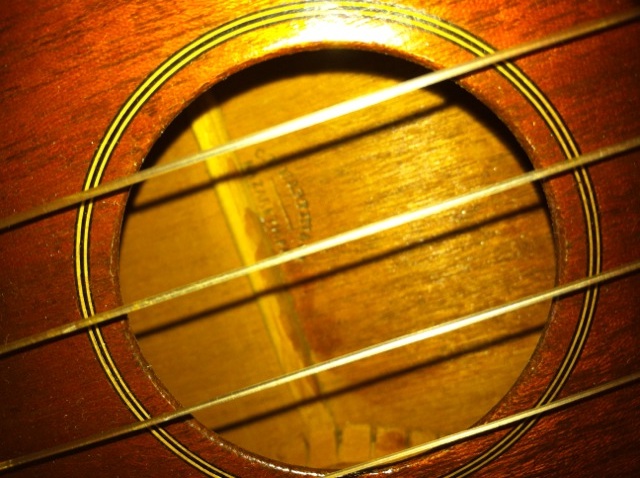
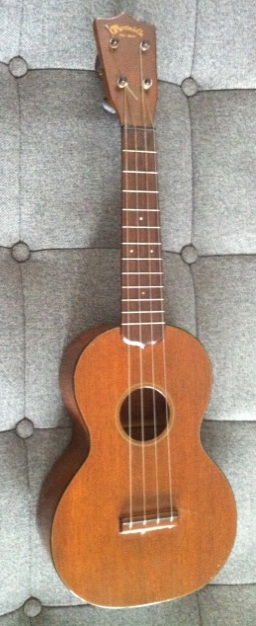
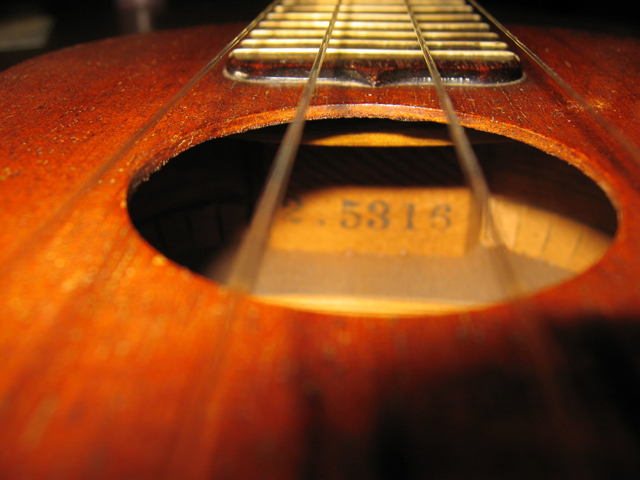
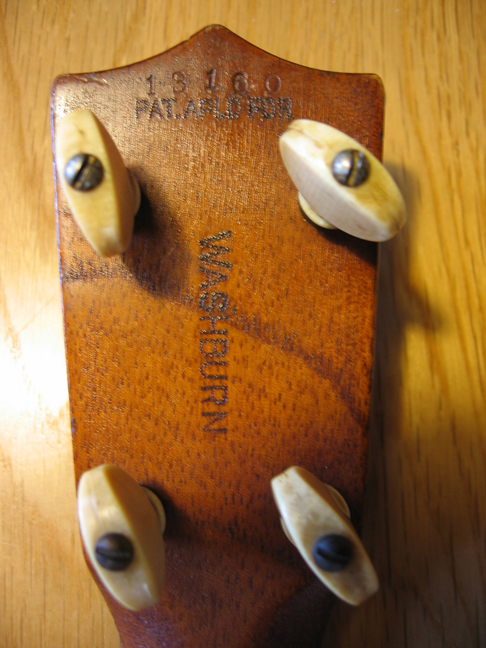
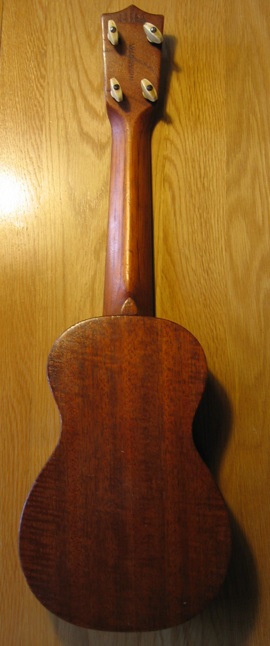
Question: I was wondering if you could tell me a little bit about a Washburn ukulele that I recently purchased from a widow. Her husband collected just about everything and brought this home about 40 years ago, but never played it. It's 21" long and has two patents — one pictured on the back of the headstock and one listed simply "PAT. APL FOR" on the bridge just below the saddle. I can't seem to find anything similar to this uke anywhere online. Thank you!
Answer: Your ukulele was made by the Lyon and Healy Company of Chicago, probably around 1926–1928. The model number "5316" is stamped on the neck block. The 5316 was known as the "Collegian". It is made from figured mahogany. Lyon and Healy made very good quality instruments and the Washburn line were their best instruments. The 5316 was one of their more basic Washburn models, but it is still a nice quality instrument.
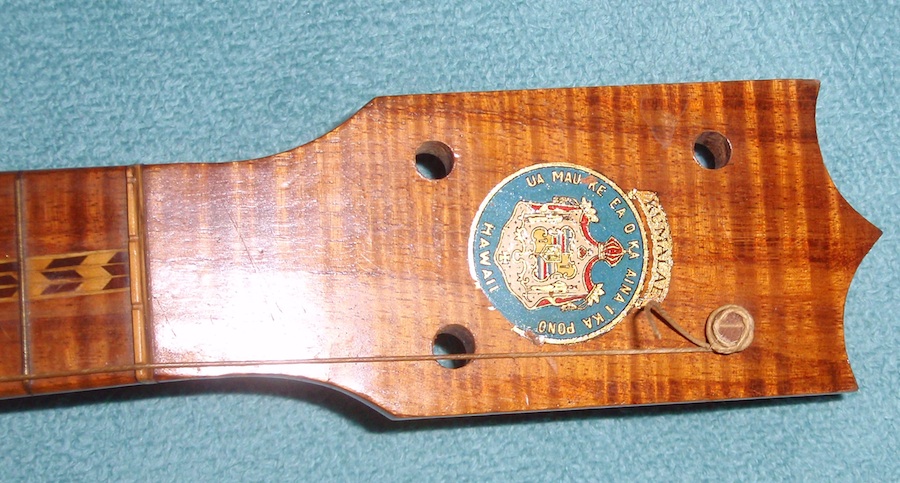
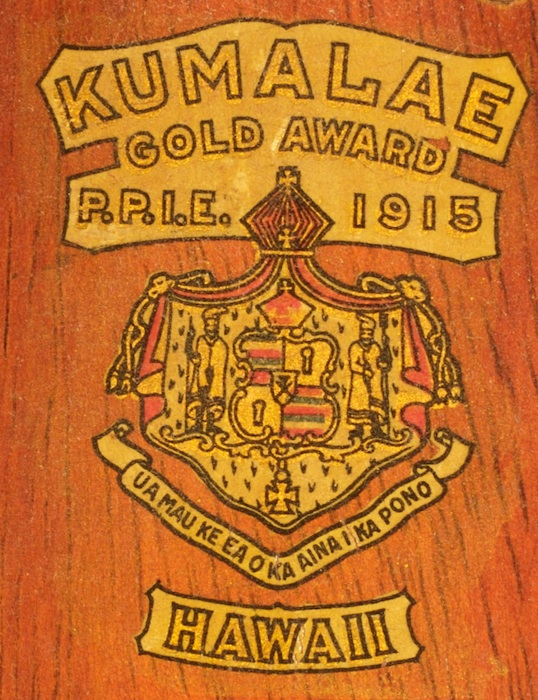
Question: Hi there. Congrats on a great web site! I have a couple of older Kumalae ukes and am interested to know more about the decal which has the following words in Hawaiian language: UA MAU KE EA O KA AINA I KA PONO. Do you happen to know what this means? The logo itself is very interesting with various figures and symbols on a shield flanked by two figures who appear to be standing on a stage with curtains drawn back by other figures. Is there any information on what the symbols mean or represent? Many thanks.
Answer: "UA MAU KE EA O KA AINA I KA PONO" is the Hawaii state motto. Its translation is "The Life of the Land is Perpetuated in Righteousness". The logo with the figures is a version of The Great Seal of the State of Hawaii. Obviously, the Kumalae ukuleles predate Hawaiian Statehood. At the time the ukuleles were made these were the Seal and Motto of the Territory of Hawaii.
Question: We have a ukulele that my father purchased through a comic book during the 1920's. It has a material on it that looks like Ivory, but I don't think it is, it is very thin. It is located by the hole where it would be strummed and it goes up the throat under the strings. It is some type of wood with a white trim around it. The plastic tuning knobs have a screw in the top and the label inside is pretty much gone except for the letters "NL" and a number 10821 stamped on the throat and the inside of the instrument. I am more interested in the maker and history than the value, and it will stay in the family. Any information you can give me I will appreciate. Thank you in advance for your assistance.
Answer: Your ukulele was made by the Harmony Company of Chicago, sometime in the 1930s. The label inside used to read "Supertone". Supertone was a brand name of the Sears Company. Sears actually owned Harmony at the time, and Harmony made many different musical instruments that were sold through Sears and elsewhere. The material on the fretboard is Pyralin — known to collectors today as "mother of toilet seat". Harmony made mostly inexpensive instruments, but yours is a better than average Harmony.
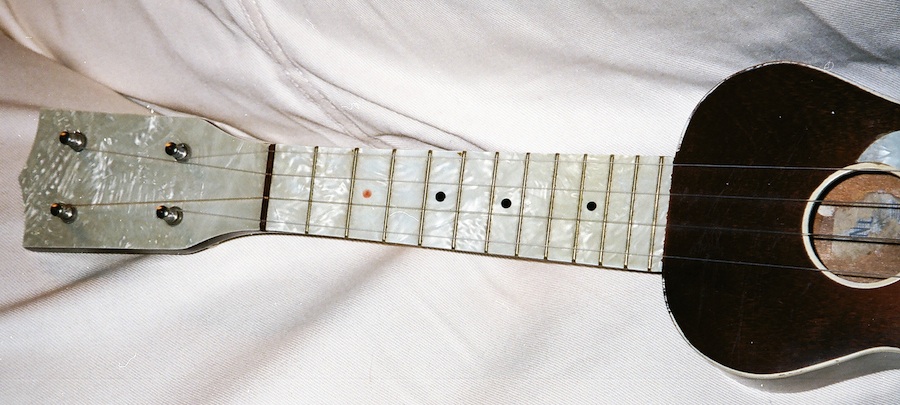
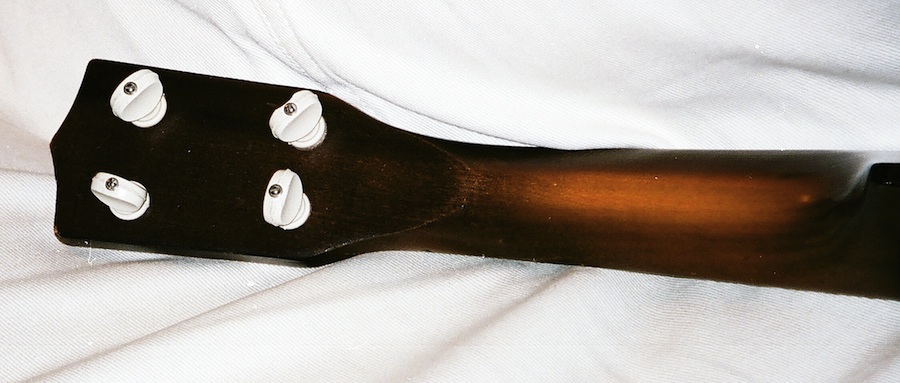
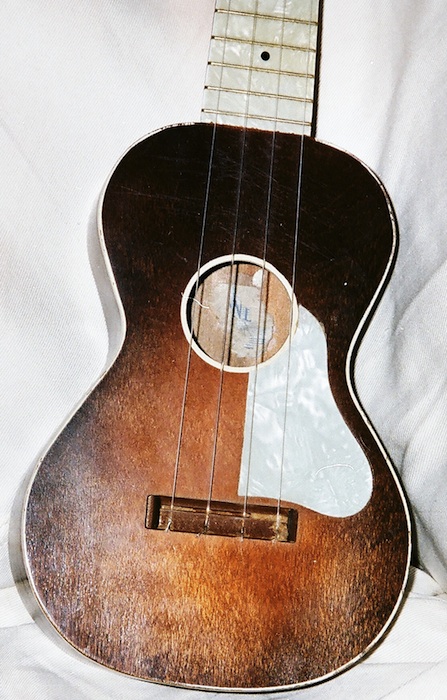
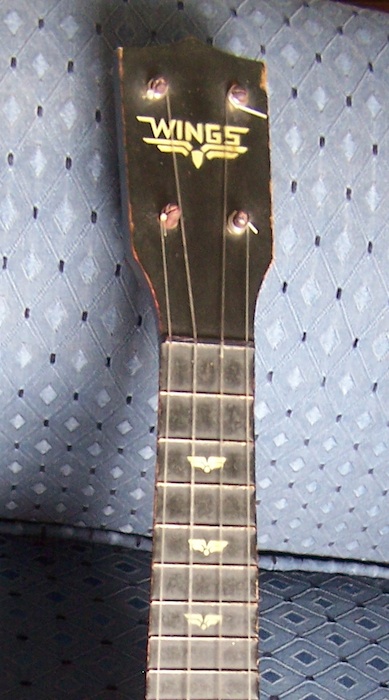
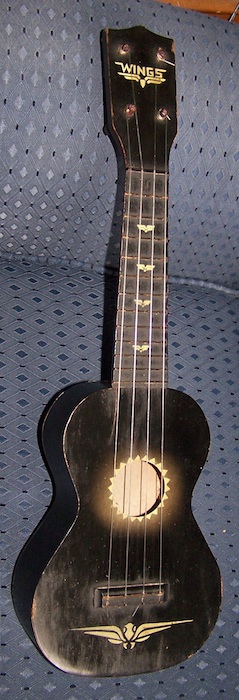
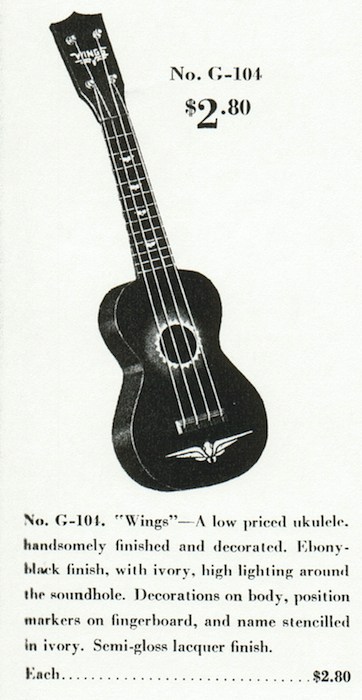
Question: I have inherited an old ukulele from my father-in-law. The only markings is the stamped logo, "Wings". It has wooden friction pegs rather than the newer tuning pegs. I cannot find any information on the manufacturer. Can you give me any information on this Ukelele?
Answer: That is a great ukulele you have. I have a 1932 Carl Fischer catalog that includes this ukulele. It sold for $2.80 at the time. The description read as follows: "Wings" — A low priced ukulele, handsomely finished and decorated. Ebony-black finish, with ivory highlighting around the soundhole. Decorations on body, position markers on fretboard, and name stencilled in ivory. Semi-gloss lacquer finish. These ukuleles were made by the Harmony Company of Chicago, Illinois. I don't know if the name has any relation to the 1927 movie Wings (the winner of the first Academy Award for best picture).
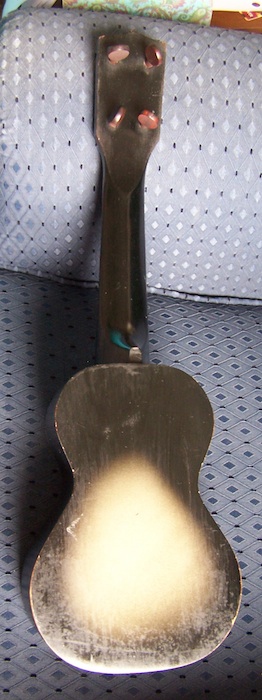
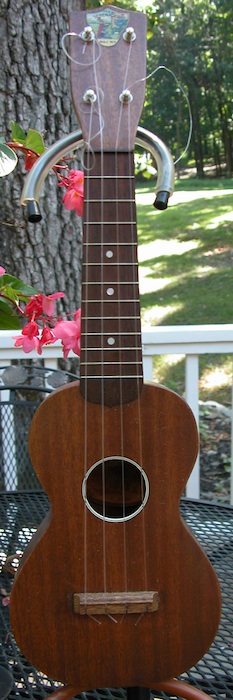
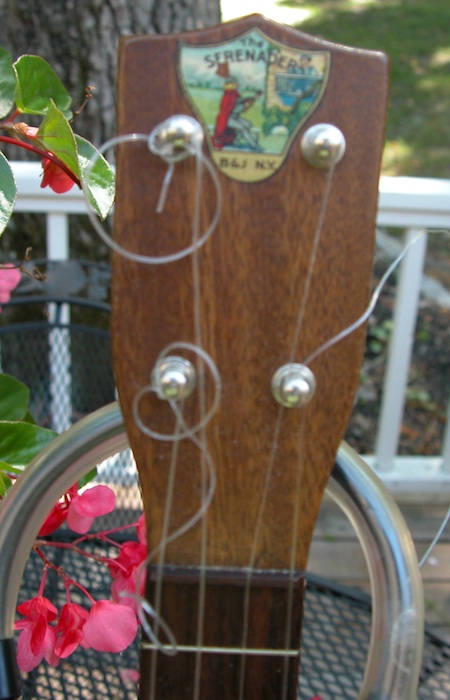
Question: I have this wonderful old instrument. Is there anything you can tell me about it?
Answer: B & J stands for Buegeliesen and Jacobson. B&J was an instrument distributor based in New York City. They did not manufacture their own instruments. Instead, they sold instruments made by an assortment of different companies. Their instruments were sold under a number of brand names, including Serenader, Mele, and SS Stewart. The Serenader name was first used on Ukuleles in 1926. The trademark was registered in 1927 and renewed in 1947, so it was used for quite a long period of time. Your ukulele was made by the Harmony Company of Chicago in the 1930s. It is one of Harmony's better ukuleles, with all mahogany construction. It appears to be in very nice condition.
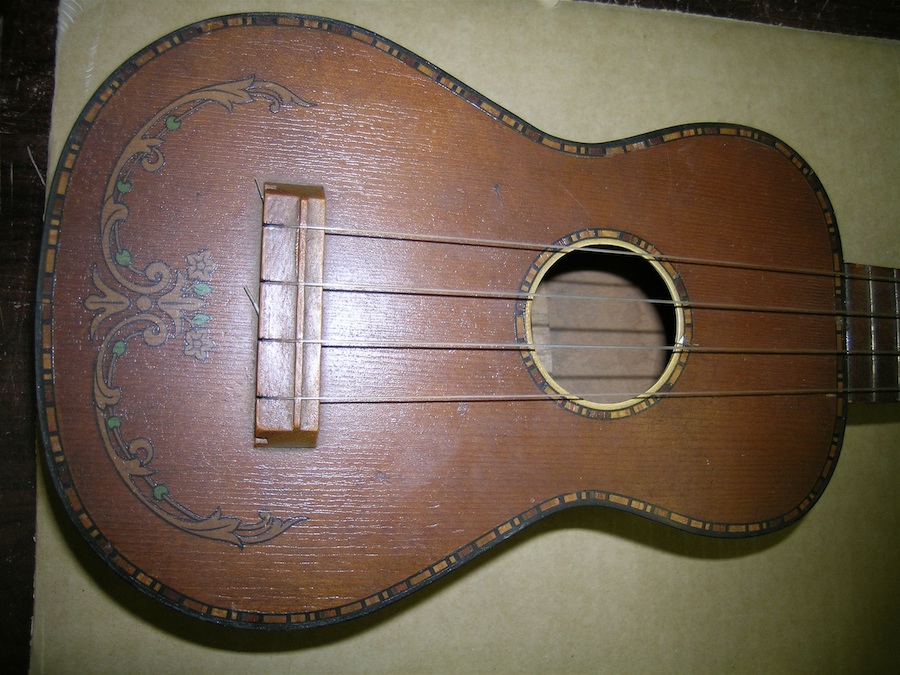
Question: Any idea age or make? No markings. Edges and hole has inlay. Bottom scroll work looks like glued rather than painted. At garage sale sellers only said was like a dept. store give-away uke. Back is just plain... thanks.
Answer: Your ukulele was made by the Regal Musical Instrument Co. of Chicago Illinois. I would guess that it was made in the early 1930s. It has a spruce top. Regal made mostly inexpensive instruments. Your ukulele is actually somewhat fancy for Regal, with the colorful binding and the decal on top.
Question: I've got a ukulele from my father which he bought in the thirties while at sea with the trade mark AFSON. Can you say anything about it? Best regards.
Answer: Afson was a brand name for the company A. Favilla & Sons. They made instruments in the later 1920s in New York. They are blood related to the more commonly seen Favilla Company, but they were a separate company run by another part of the family. Their instruments don't turn up a whole lot; they might not have been in business for too long.
Question: Found this at a yard sale I was gonna restore... I can't see it being a rare find... I'd like to know more about it... Would you know if this was made from mahogany or koa?
Answer: Your ukulele's headstock decal used to read "Mele". "The Mele" was a brand name used by Buegeleisen and Jacobson (B&J), a New York City based musical instrument distributor. They sold many types of ukuleles that were made by a number of different manufacturers, and they used the name "The Mele" on a wide range of instruments from these manufacturers. Most of the instruments that B&J sold with the "The Mele" label were manufactured by the big Chicago companies like Harmony and Regal. I can't tell from your photos the shape of the bridge — this might be enough to know whether it is Harmony, a Regal, or something else. The wood does not look like koa to me, again it is hard to say for sure without bigger photos.
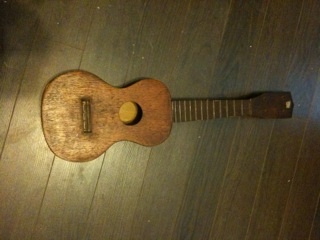
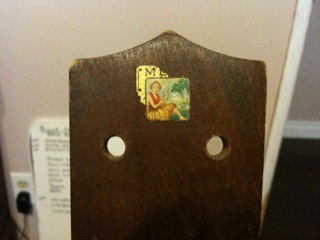
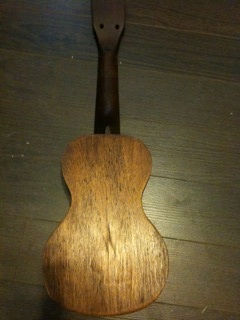
Question: Could you please identify the pictured ukulele and tell me about it.
Answer: Your ukulele is a product of the Aloha Ukulele Manufacturing Company. The company was in business from 1917 to 1935 in Honolulu. The main ukulele builder there was Tai Chong Goo, who worked under the pseudonym Akai. The unusual headstock shape on your ukulele was used on many Aloha and Akai ukuleles, and I have never seen it used by another maker.
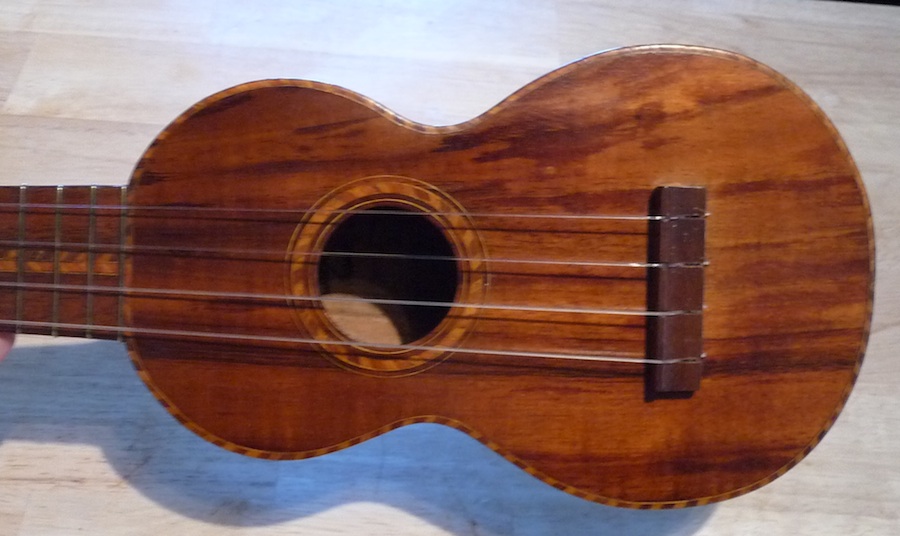
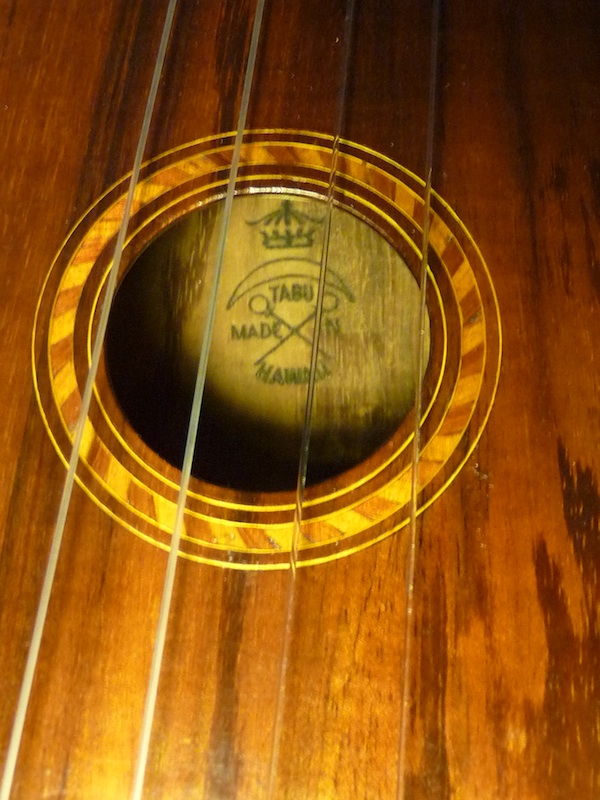
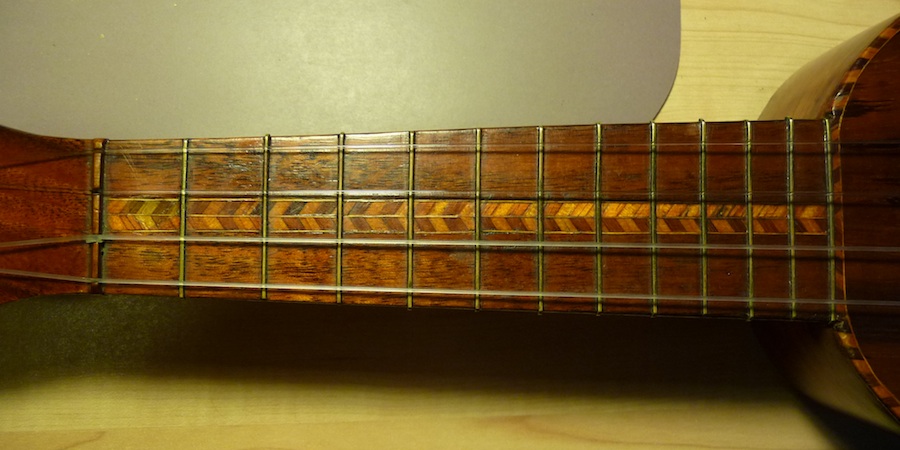
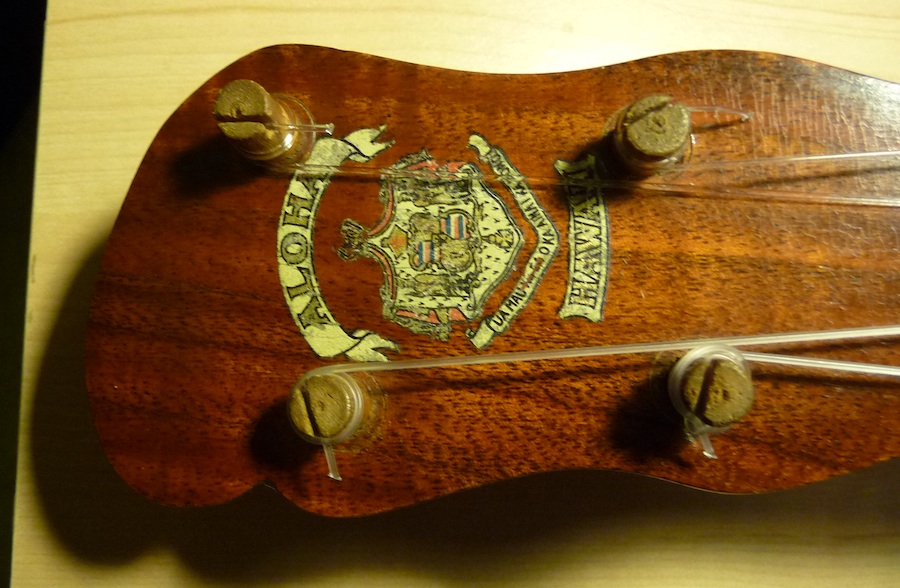
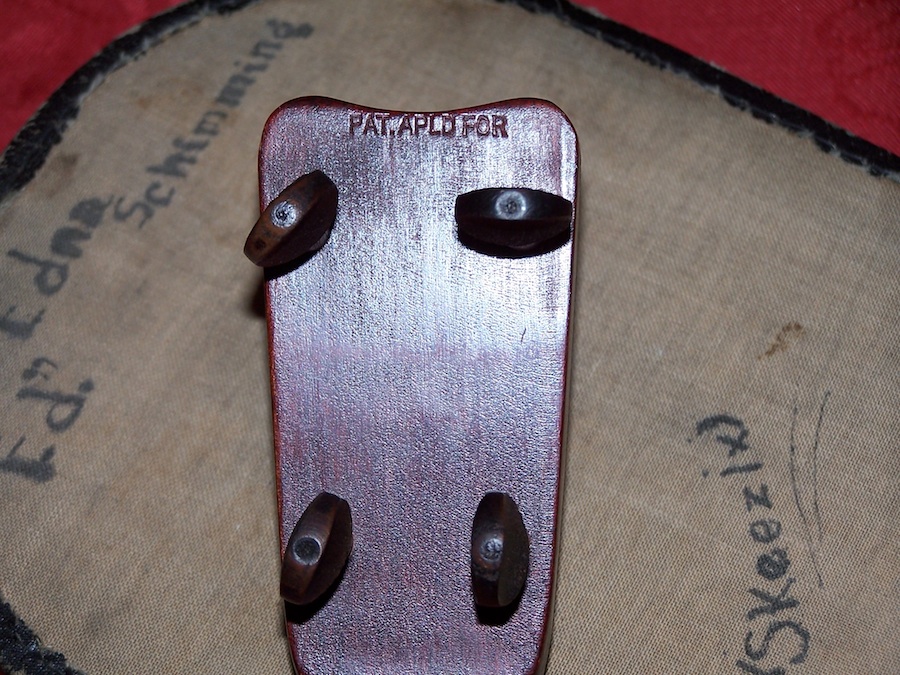
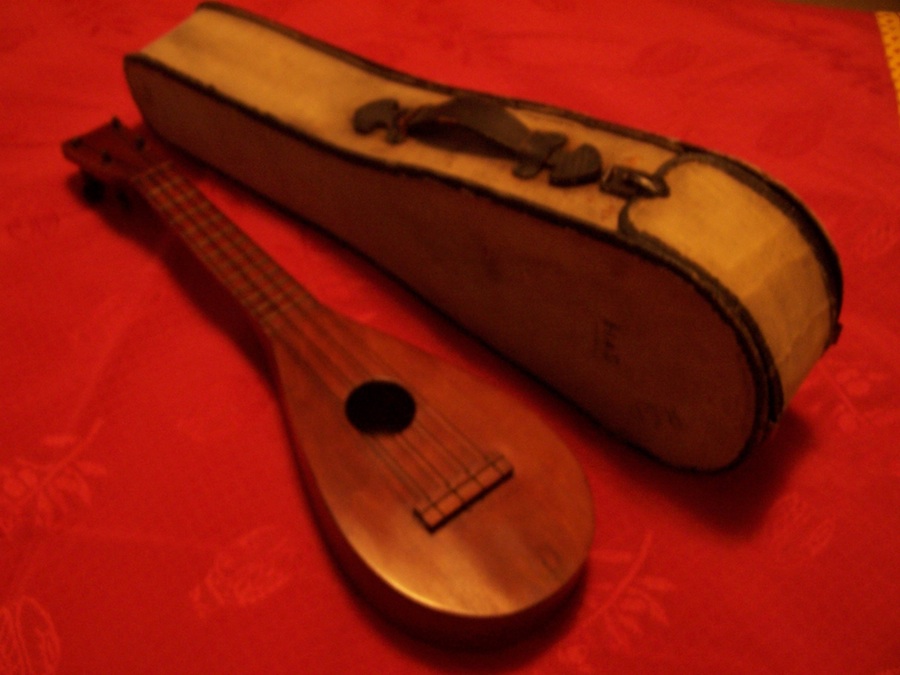
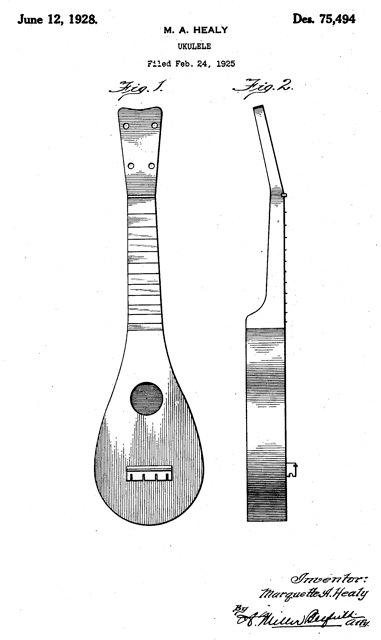
Question: I would like to know more about my uke which I'm told is a Lyon and Healy from the twenties. It's a simple teardrop model (with case) in great shape as near as I can tell and has "patent applied for" on the headstock. Thanks in advance for any info you can provide.
Answer: Yes your ukulele was made by Lyon and Healy. It is a model they called "The Venetian". These were only made in the 1920s. I've attached an image of the patent, which was granted in June of 1928. By the time the patent was granted, Lyon and Healy had discontinued the manufacturing of all instruments (except harps). The Venetian was an inexpensive model, but they are still well-made and can sound pretty good.
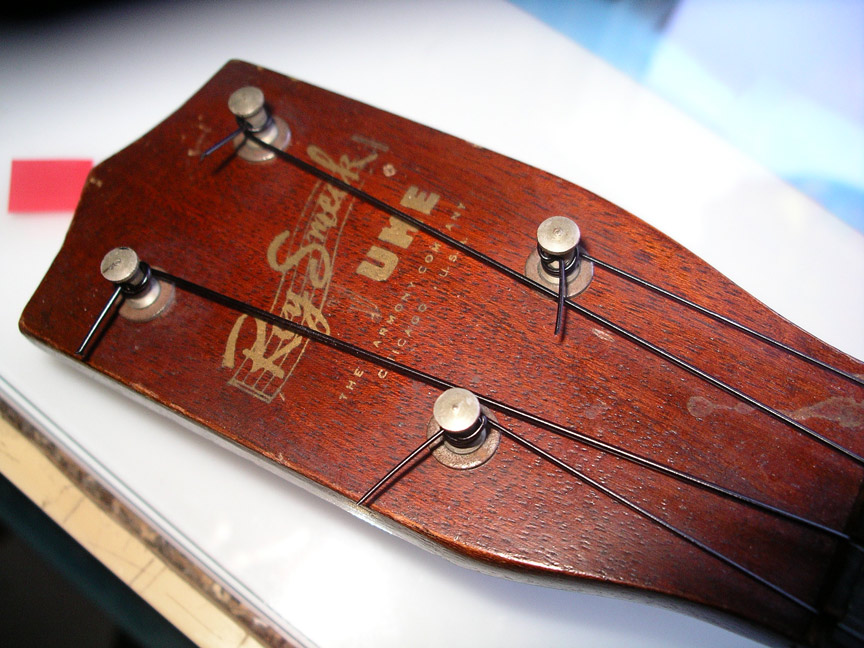
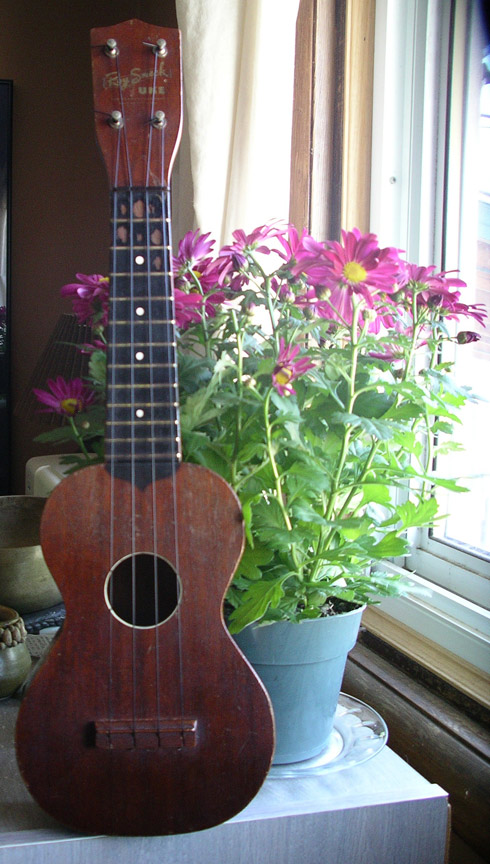
Question: Hello and thank you for this really great website! I hope you can help me pin a date on this oddball. It's a Roy Smeck uke with brass frets, the first i've ever seen (i own another Roy Smeck with a plastic fret board). Plastic tuners, looks to be solid mahogany and it's LOUD! my new favorite uke!
Answer: The Harmony Roy Smeck ukuleles came in a few different iterations over the years. Your model, the soprano model with the painted wood fingerboard, was first sold in the first half of the 1950s, around 1954 I believe. In 1958 Harmony started using their plastic fingerboard on the Roy Smeck ukuleles. Harmony definitely sold a whole lot more of the plastic fingerboard model based on how often the different models turn up today. I too have one of the wood fretboard Smeck ukes — it is a nice little instrument.
Question: Hi! I bought this old Martin Ukulele with its vintage gigbag. It can be opened/closed with two poppers on its back side. Can you tell me more about this instrument? Many thanks for your help and cheers for all at the Museum!
Answer: You have a beautiful looking Martin Style 1k soprano ukulele. It has a Hawaiian koa wood body. It was made between 1927 and the early 1930s. It appears from your photos to be in excellent condition. The case is probably original or at least from the same vintage as the ukulele. That type of case is notorious for damaging ukuleles — the snaps at the bottom sometimes will crack the bottom of the ukulele when popped shut. I'd suggest getting a decent hardshell case.
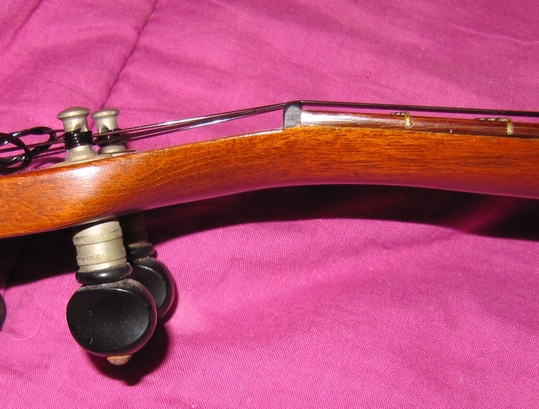
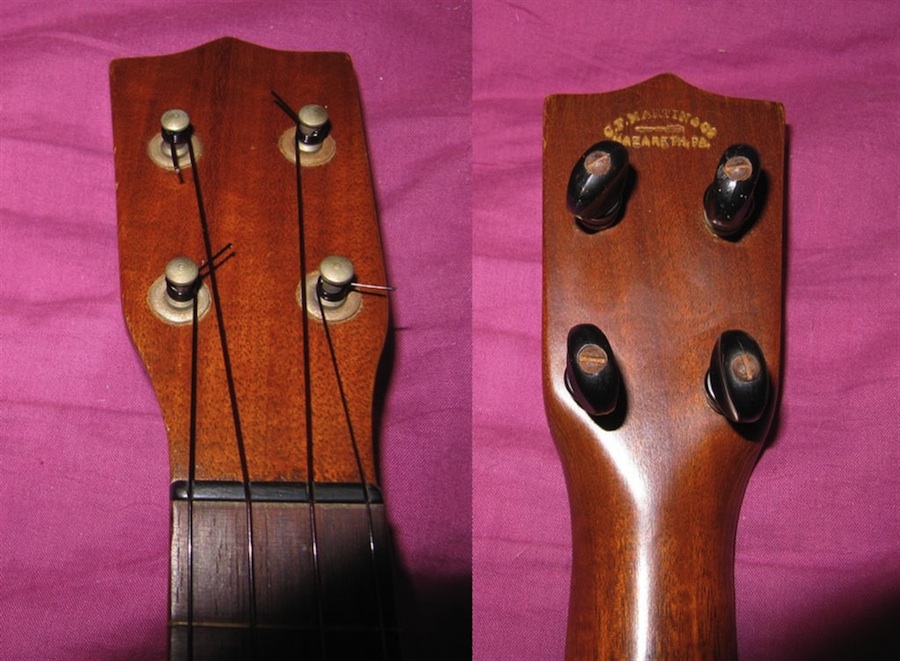
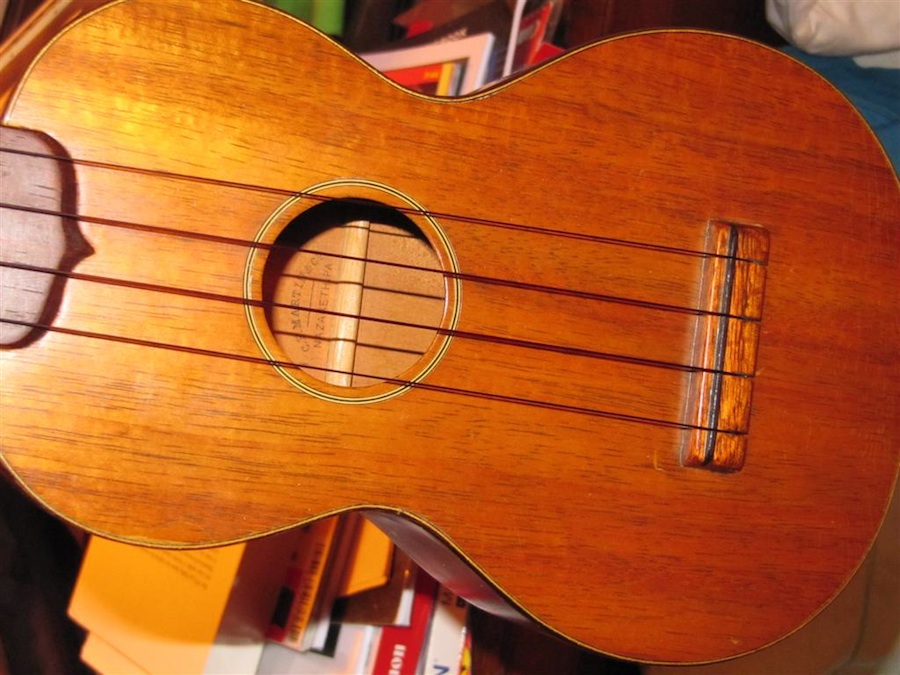
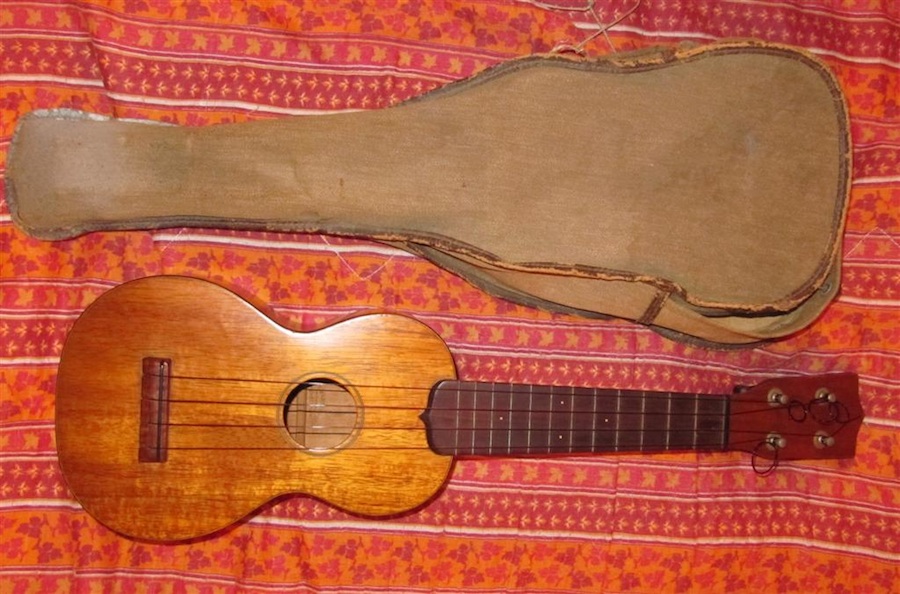
Question: Hello, Could you tell me about ukuleles that were manufactured in New York City? I was surprised to find out about a Brooklyn company in the 20s called Turturro's. Would you happen to have any more information about them or any other New York companies. Thank you.
Answer: There have been a number of companies that manufactured ukuleles in New York City, primarily in the 1920s. Here is a short list:
Albert Houdlett & Son, Brooklyn: Made Nu-Way banjo ukuleles
Favilla, Manhattan, Brooklyn, later Long Island: Made ukuleles & banjo-ukuleles
Gretsch, Brooklyn: Made ukuleles & banjo ukuleles under many brand names
A. Mannello & Sons: Made Rivola brand ukuleles
Nicola Turturro: Made standard ukuleles, tiples, and unusual peanut ukuleles and the "turnover" a mandolin-ukulele combination
Epiphone (House of Stathopoulo), first Manhattan then Long Island City: Made banjo-ukuleles and some standard ukuleles
William Lange, Manhattan: Made banjo ukuleles
Sullivan & Ries, Brooklyn: Made banjo ukuleles
There were also a good number of distributors in NYC that would buy ukuleles from manufacturers and distribute them for retail trade. Sometimes paintings or decals were added by these companies to make the line their own. Some major NYC distributors include Buegeleisen & Jacobson (B & J), Progressive Musical Instrument Co. (P'mico), C. Bruno & Son, and the Henry Stadlmair Co. Just across the Hudson in Jersey City, NJ was Oscar Schmidt, a major musical instrument manufacturer that made many ukuleles and banjo ukuleles.
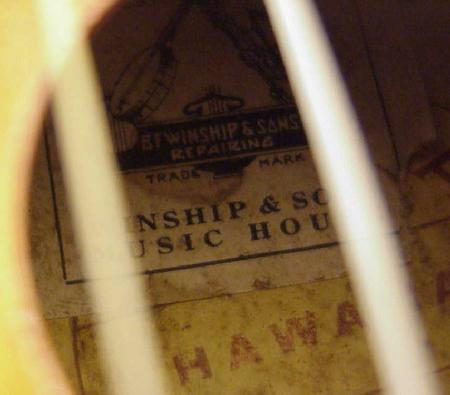
Question: Hello, I have this koa ukulele which I have been told is from the 1930's, it has the label inside but can't find any information about it. Could you please have a look and see if it rings any bells. Thank you for your time.
Answer: I believe your ukulele was made in California sometime between 1914 and 1920. As the ukulele became popular in California, a few different ukulele manufacturing plants opened in California. The ukuleles they produced were often made from koa, and they were sometimes patterned after Hawaiian instruments. The three piece neck on your ukulele is one of the features of many of these ukuleles — and it was pretty much unique to these California ukes. I think the California manufacturers all shut down as the larger Chicago instrument manufacturers got going into ukulele production. Winship & Sons Music House was located in Spokane, WA (I am not sure if they had other branches).
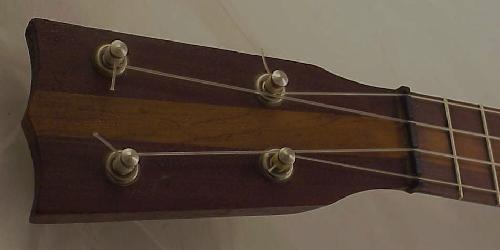
Question: Here are pictures of the Regal concert uke that I have owned for nearly sixty years. It was a used uke when I bought it. It was with me in the Korean War. The finish is beginning to crack. What can you tell me about this Regal uke? How old is it? What restoration methods are recommended?
Answer: That's a great story about your ukulele. I think it is wonderful that you have held on to it for such a long time. I would estimate that your ukulele was made between the late 1920s and the late 1930s. Regal was a large Chicago-based instrument manufacturer. They made mostly inexpensive or mid-priced instruments, but some of their ukuleles play and sound great. If the cracking that you mention is just in the finish, I wouldn't be too concerned. If the wood itself is developing cracks, you should bring it to a good luthier who can handle the repair. I'm sure that you could get it refinished by a good luthier too, but I'm not sure that I see the need to do that.
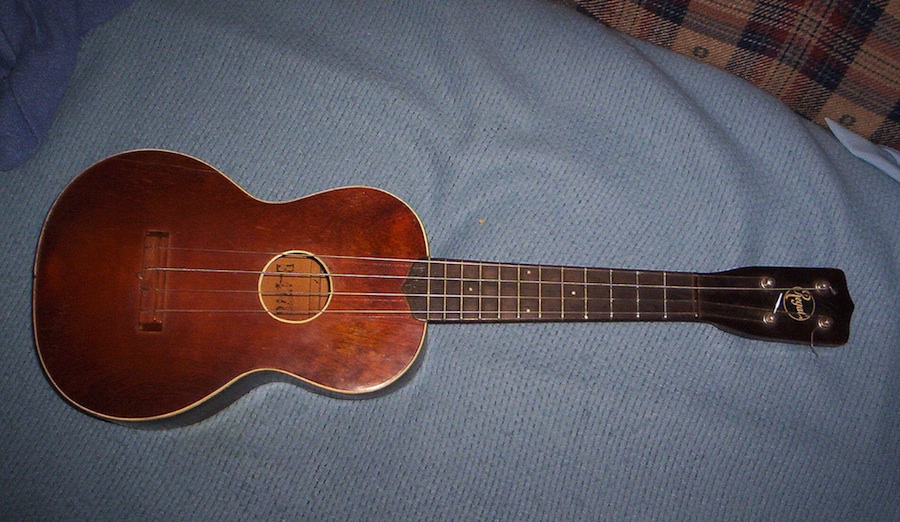
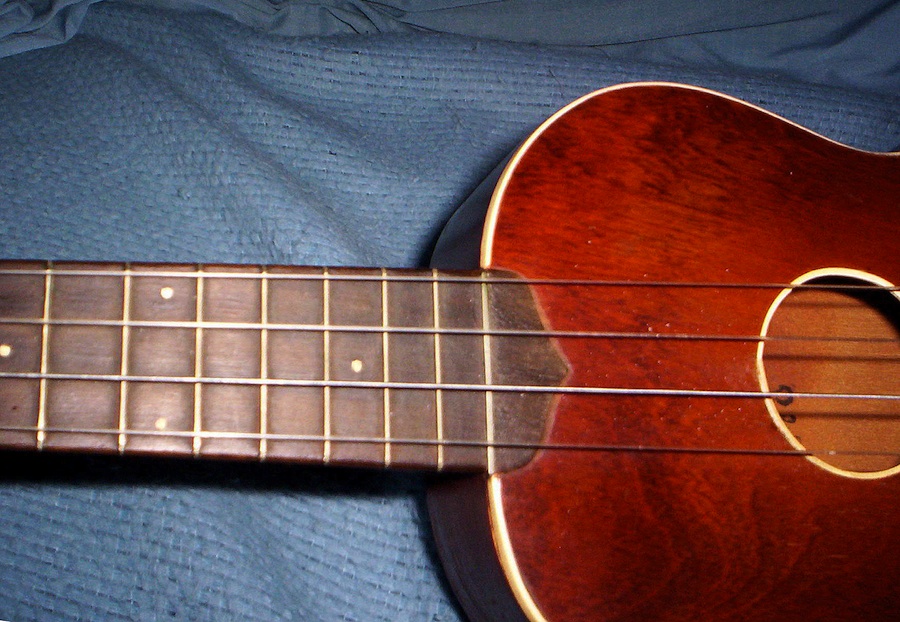
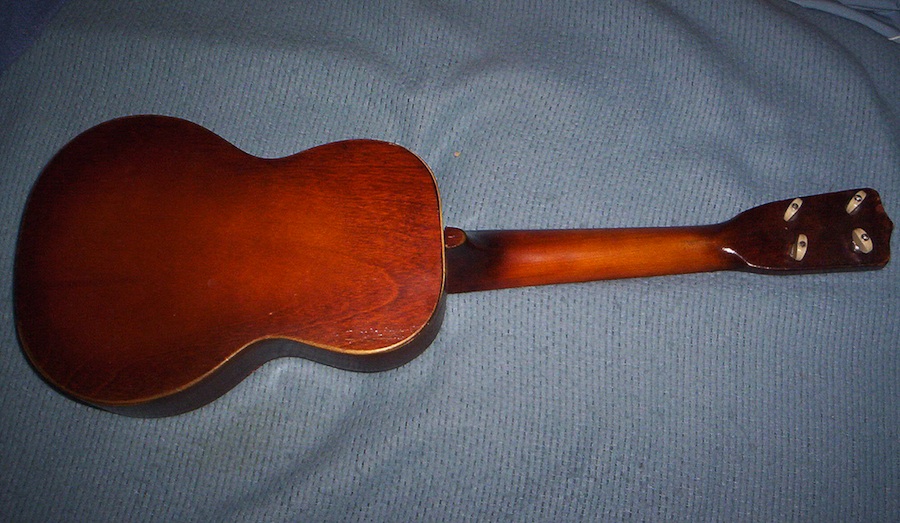
Question: I recently found this Ukulele and a "sister" Ukulele stored with other family items from the 50's. I did my research and believed they were products of Jonah Kumalae, but not everything matched up. While reviewing all of your Q & A, and seeing several Kumalae, I'm still not sure. The shape of the headstock and the chevron shape of the bottom of the neck suggest someone other than Kumalae. It has been suggested that they may have been made by Sam Chang or even by Echo... Can you help. Since I have two nearly identical, this is referenced as "Y' KE KE" as it contains that name on the Headstock.
Answer: Y'Ke'Ke was a trademark registered in 1926 by Jules M. Sahlien, a San Francisco based musical instrument distributor. He sold instruments made by a few different Hawaiian manufacturers. I am quite sure that both of your ukuleles were made by the Hawaiian Mahogany Company. This company was run by C.Q. Yee Hop & Co of Honolulu. They were selling "Royal Hawaiian" ukuleles by 1929 — possibly earlier. I would guess your ukuleles were both made in the late 1920s or early 1930s. Echo ukes were also a product of the Hawaiian Mahogany Company. Both of your ukuleles are high-end instruments, fancier than the vast majority of Royal Hawaiian ukuleles.
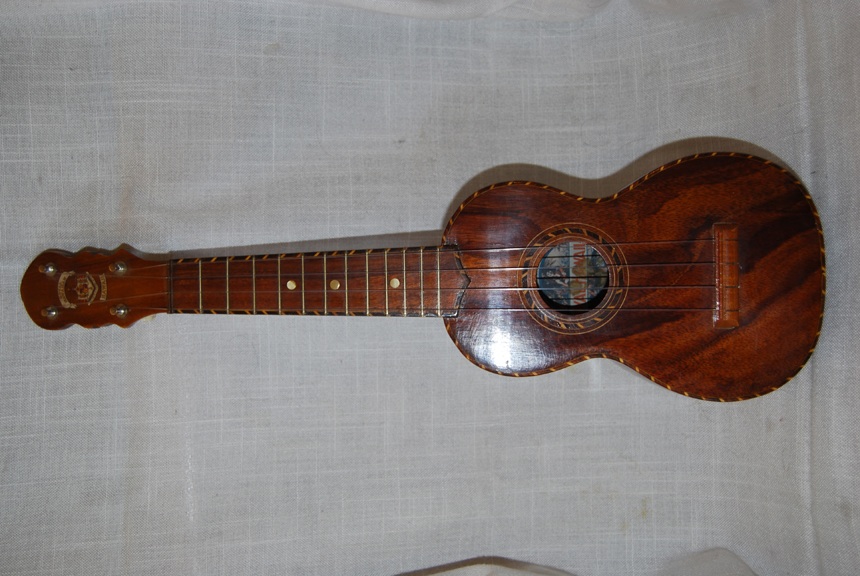
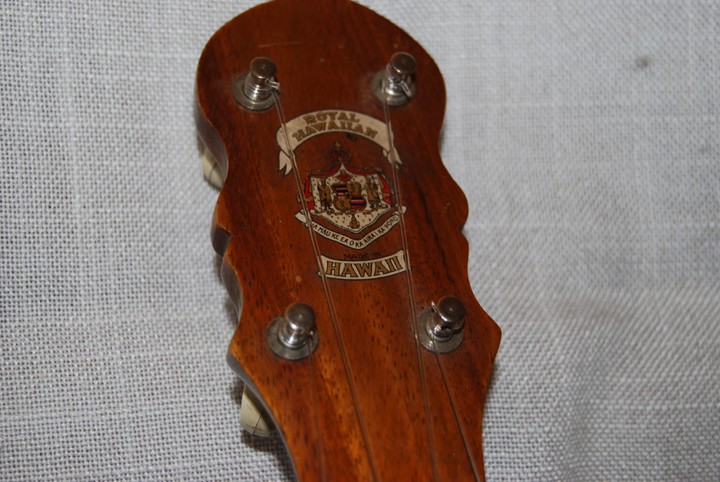
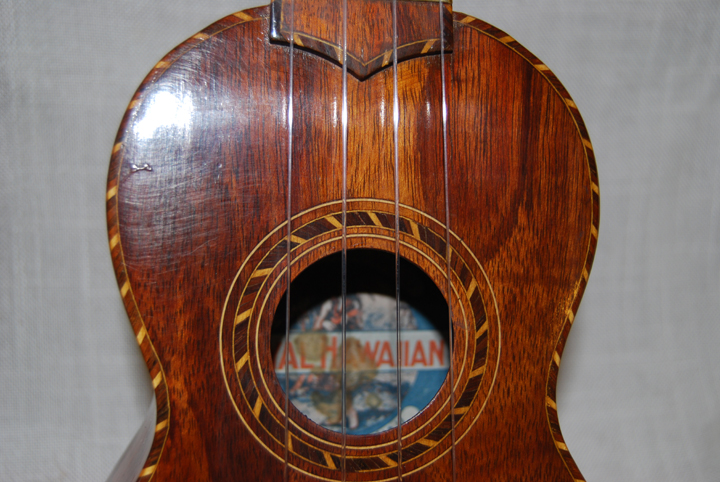
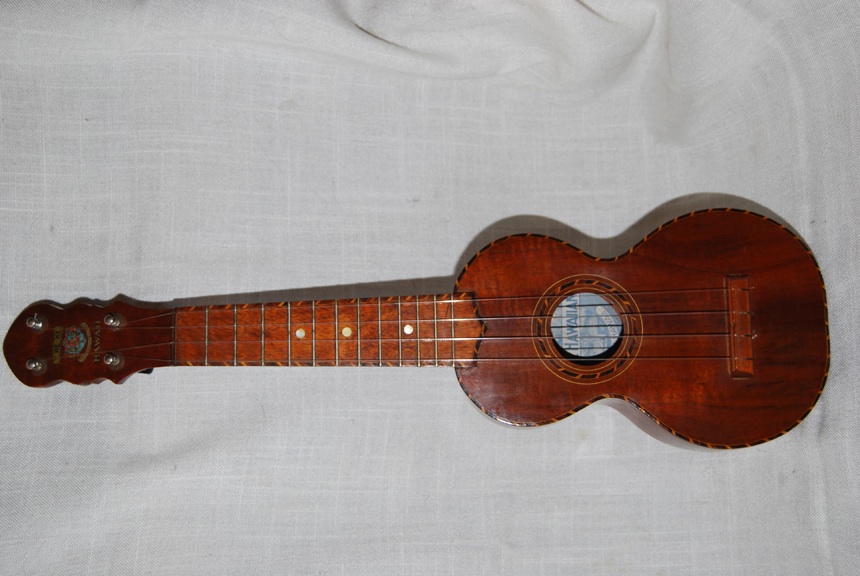
Question: I would be interested to know when this ukulele was made.
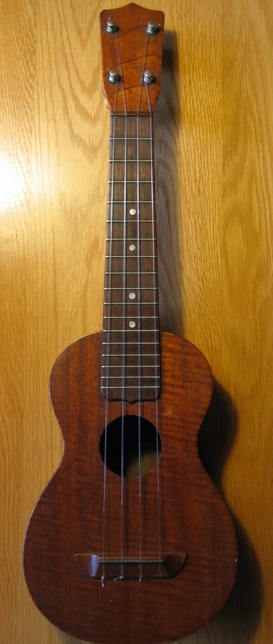
Answer: Your ukulele, a Kumalae model E, is the high end of the Kumalae line. It was probably made sometime between 1920 and the early 1930s, but it would be difficult to be any more specific. It looks to be in very nice shape, except the bridge looks like a replacement.
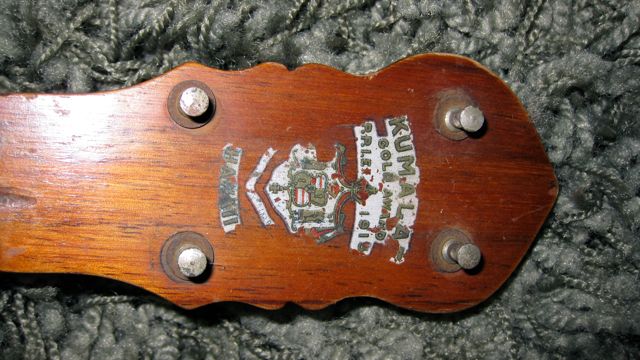
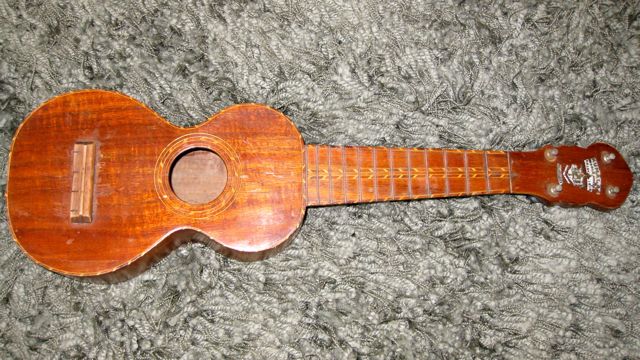
Question: Could you give me some info on my Ukulele?
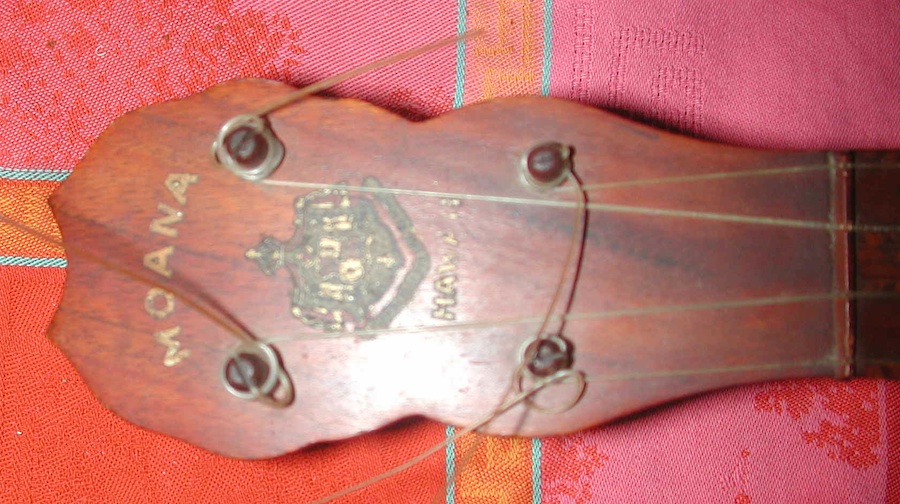
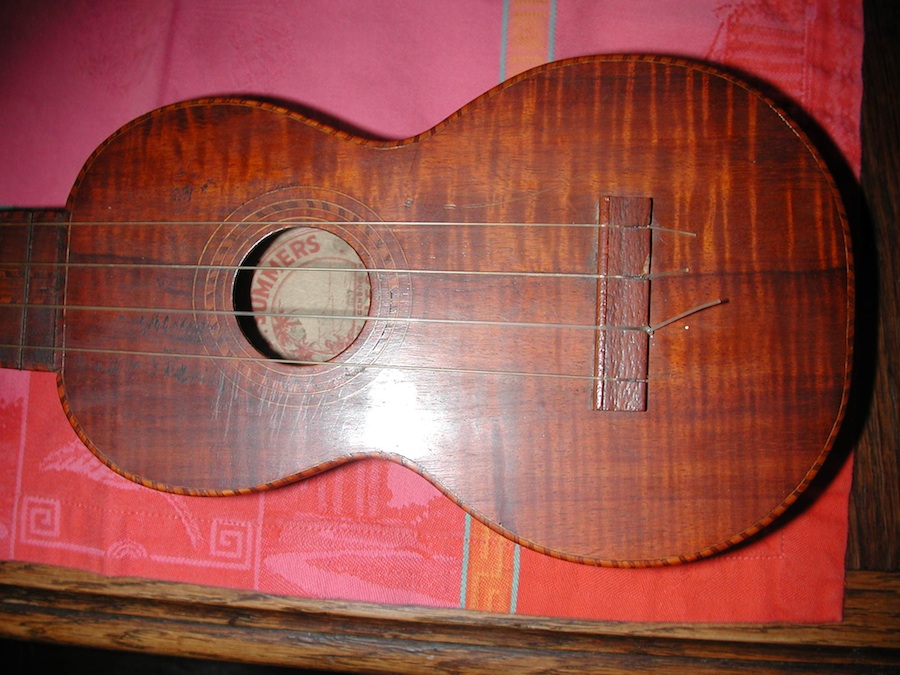
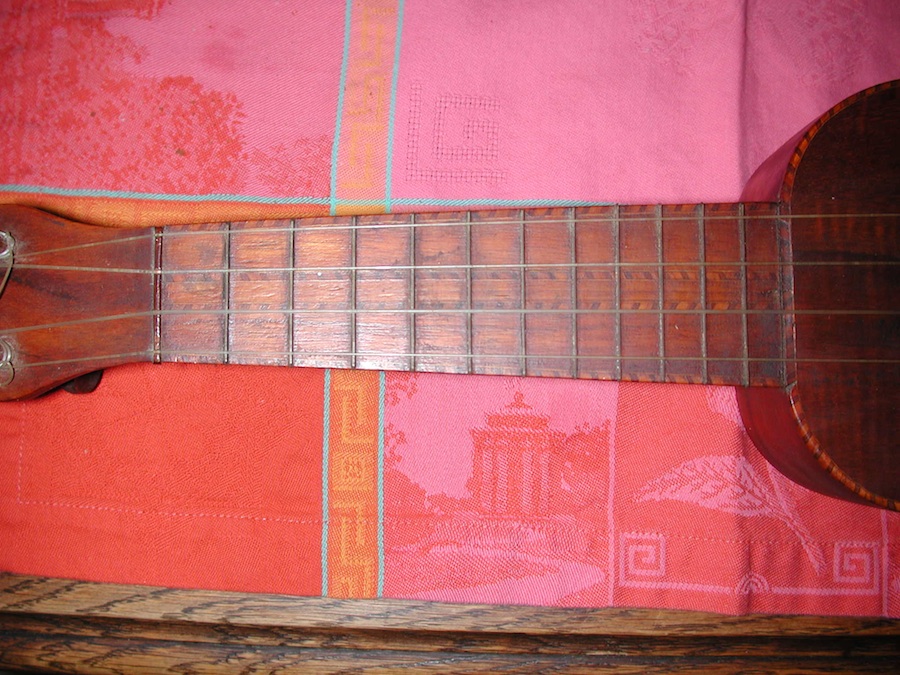
Answer: That is a great old Hawaiian ukulele you have. Paul Summers was a Hawaiian musician and music instructor in Honolulu, Hawaii in the 1920s and 1930s. He worked at both the Royal Hawaiian Hotel and the Moana hotel. He didn't manufacture his own instruments, he sold instruments made by a number of different Hawaiian ukulele makers. The Moana decal on your ukulele suggests to me that it may have been sold by Summers from a shop at the Moana hotel. The stamp on the back of the headstock is a stamp used by many Hawaiian makers to verify that their ukuleles were genuine products of Hawaii. Your ukulele is a very high-end Summers instrument. The beautiful koa wood, fancy inlays on the body and neck, and the fancy shape of the headstock are features that set your ukulele apart from the standard Hawaiian ukuleles of the time period.