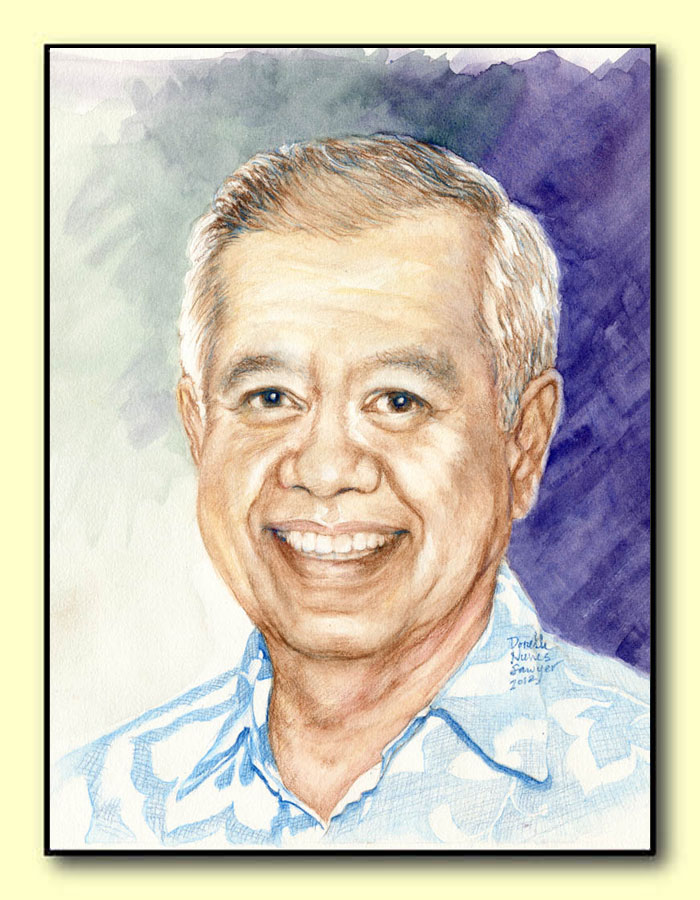
Sam Kamaka Jr.
Sons of ʻukulele maker Samuel Kamaka Sr., Sam Kamaka Jr. and Fred Kamaka Sr. grew up in the ʻukulele business. From helping their father as children in the 1920s to watching over a company now run by their children, the Kamaka brothers were involved in the manufacture of fine ʻukulele for a remarkable ten decades. After his father's death in 1953, Sam Jr. revitalized the family business and over the next few decades built Kamaka Hawaii Inc. into the premier ʻukulele manufacturer in the world. As the master luthier at Kamaka, Sam invented new ʻukulele models and construction techniques. Sam and Fred also ensured the company's long-term success by passing their skills and knowledge along to their children, who today run the modernized company.
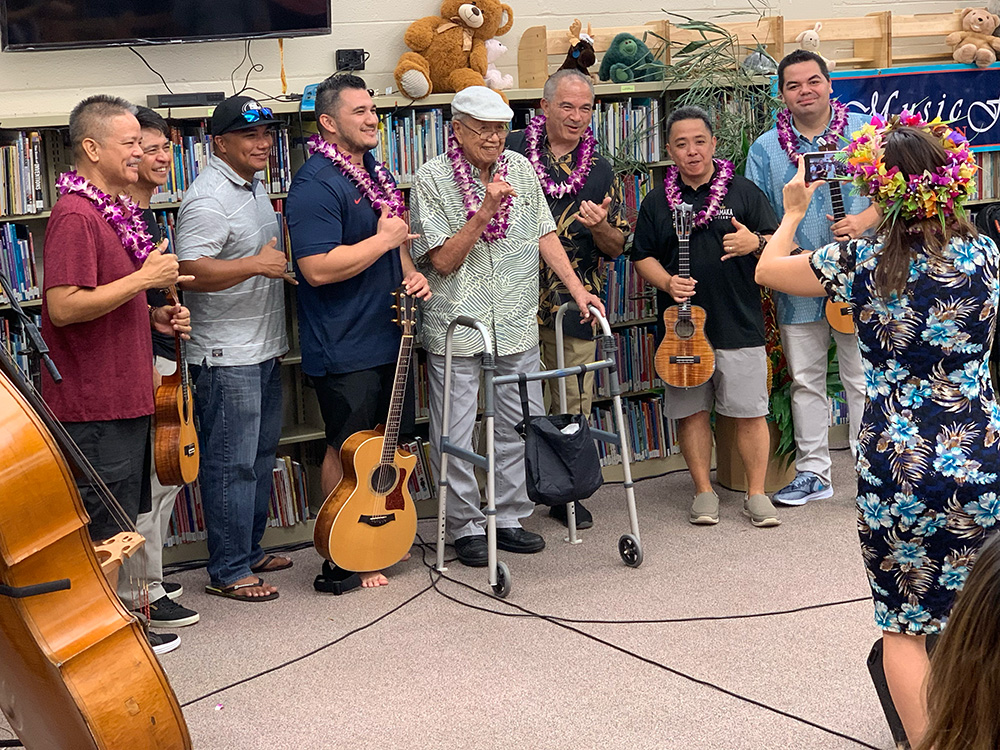
Sam Kamaka Jr. was born in 1921 in Honolulu, the first son of Samuel Kamaka Sr. and his wife May. He and his brother Fred grew up intimately connected to their father's craft — Samuel Sr. had both boys report to the ʻukulele factory every day after school to learn the art of making quality instruments. From childhood, Sam Jr. absorbed the Kamaka ethos of patient, meticulous craftsmanship.
After serving in the military and attending college on the GI Bill, Sam Jr. returned to the family business. When Samuel Sr. passed away in 1953, Sam Jr. and Fred took on full leadership of Kamaka and Sons. Under their stewardship, the company moved to its current location on South Street in Downtown Honolulu in 1959, and in 1968 was reorganized as Kamaka Hawaii, Incorporated.
As the master luthier at Kamaka, Sam Jr. invented new ʻukulele models and construction techniques, continually refining the company's instruments. He and Fred maintained their father's uncompromising standard, passing down the same advice their father had given them: "If you use the Family Name, DON'T MAKE JUNK."
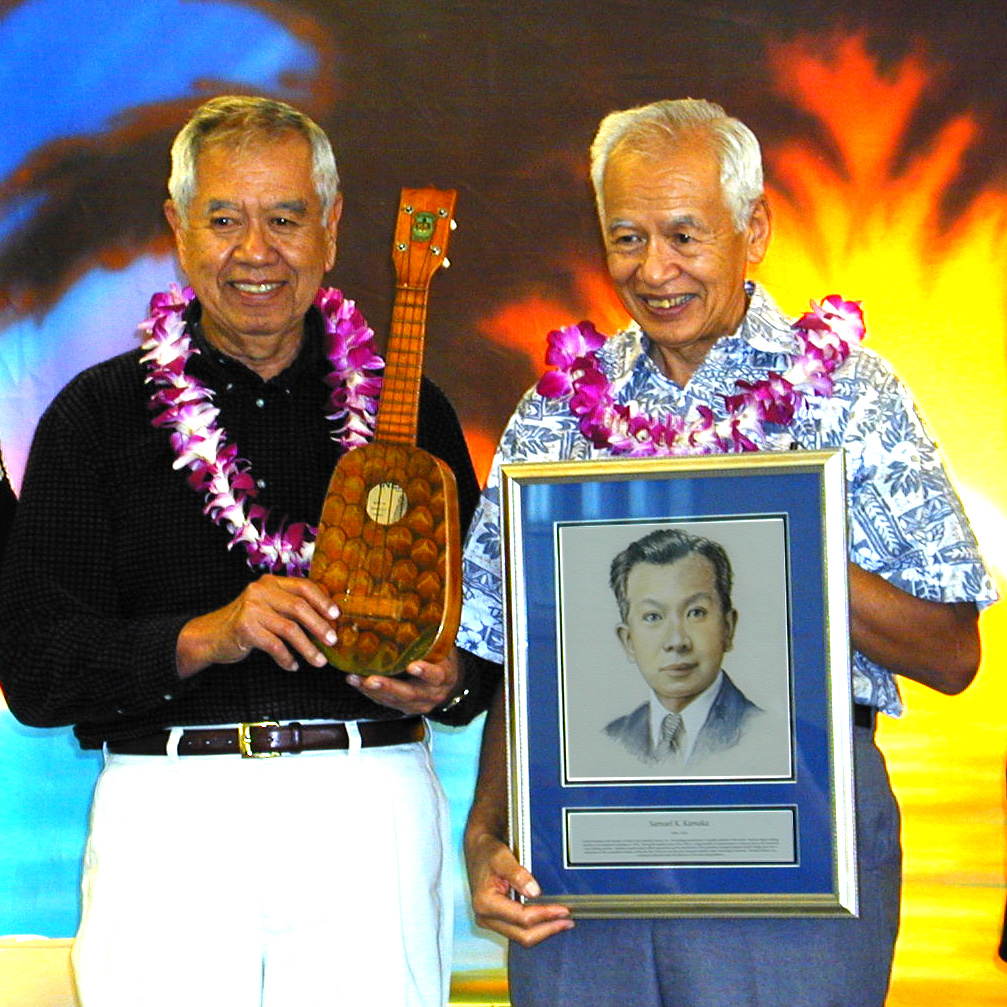
Sam and Fred also ensured the company's long-term success by passing their skills and knowledge along to their children, who today run the modernized company. Four grandsons of Samuel Sr. have been involved in the business, carrying the Kamaka tradition into its fourth generation.